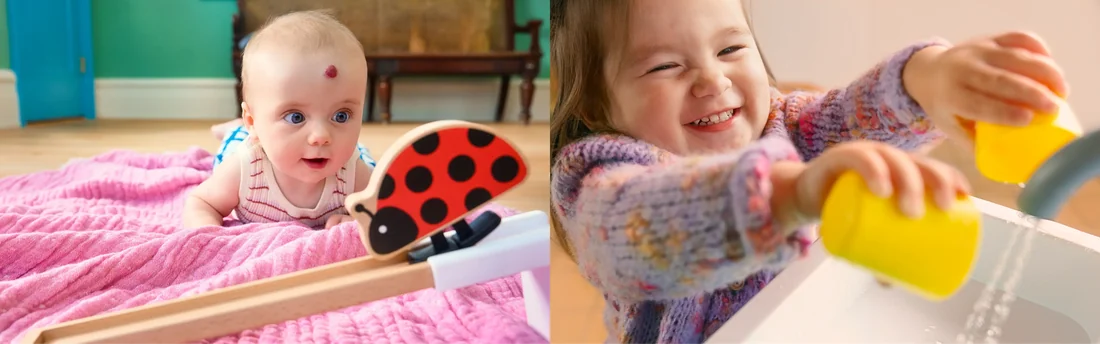
The play
Lovevery and KiwiCo both sell recurring shipments of curated play materials rather than single toys chosen off a shelf. Lovevery's Play Kits page describes boxes built around a child's developmental stage from birth to five years, arriving, its own page states, every two months for the infant kits covering birth to 12 months and every three months for the toddler-and-older kits covering ages 1 to 5, priced at 80 dollars per kit for infants and 120 dollars per kit for the toddler-and-up line. KiwiCo's subscription page describes eight separate age-banded lines, from Panda Crate for ages 0 to 36 months through Eureka and Maker Crates aimed at teens and adults, most shipped monthly, with Panda Crate the stated exception at every other month.
What the evidence says
Both companies' own pages state cadence and price rather than independent, third-party evidence that curated contents outperform comparable materials bought individually. Lovevery's page frames its stage timing as designed so kits arrive, in the company's words, at the start of new developmental windows, a description of the company's own design intent rather than a cited outside study. KiwiCo's page shows prepaid multi-month plans, for example a six-month Panda Crate Essentials commitment listed at 135 dollars, alongside three service tiers that add activity guides and books at higher price points. Both pages are manufacturer statements about their own product design and pricing, not independent test results, and this entry treats them as such.
Age fit and safety
Neither company's page retrieved states that its kits are tested against a safety standard beyond what any toy sold in the country must already meet; the pages describe age-stage sequencing as a curation choice, not a safety certification. A subscription's age band is a curation decision the company makes about developmental relevance, distinct from the age grading and warning labels a mandatory toy standard, covered elsewhere on this site, requires on the individual pieces inside the box.
What to look for
Editorial guidance: a subscription's convenience and design coherence is a real saving in time and decision-making, but it is a different value proposition from a lower per-item price, and a caregiver comparing options should look at what a comparable individual open-ended toy costs when bought once, rather than assuming curation implies better developmental value. Check the specific cadence and price on the company's own current page, since both figures are the kind of detail that changes with plans and promotions.
- What does a comparable individual toy cost against this kit's per-shipment price?
- Is the cadence and price quoted here still current on the company's own page?
- Does the child still want or need new materials on this particular schedule?
Subscription boxes make a curation and delivery-cadence claim, not a safety or developmental-outcome claim, and reading the two companies' own pricing pages side by side is a reasonable first step before treating either as a default choice.
Sources & reading trail
States Lovevery's age ranges, delivery cadence, and per-kit pricing.
Source published: Not established · Retrieved: 16 September 2026
States KiwiCo's eight age-banded subscription lines, delivery cadence, and prepaid-plan pricing.
Source published: Not established · Retrieved: 16 September 2026
Standards, recall notices, studies and records establish the entry; the what-to-look-for reading is Toy Almanac editorial analysis. This retrospective draft does not imply the site published on the event date.