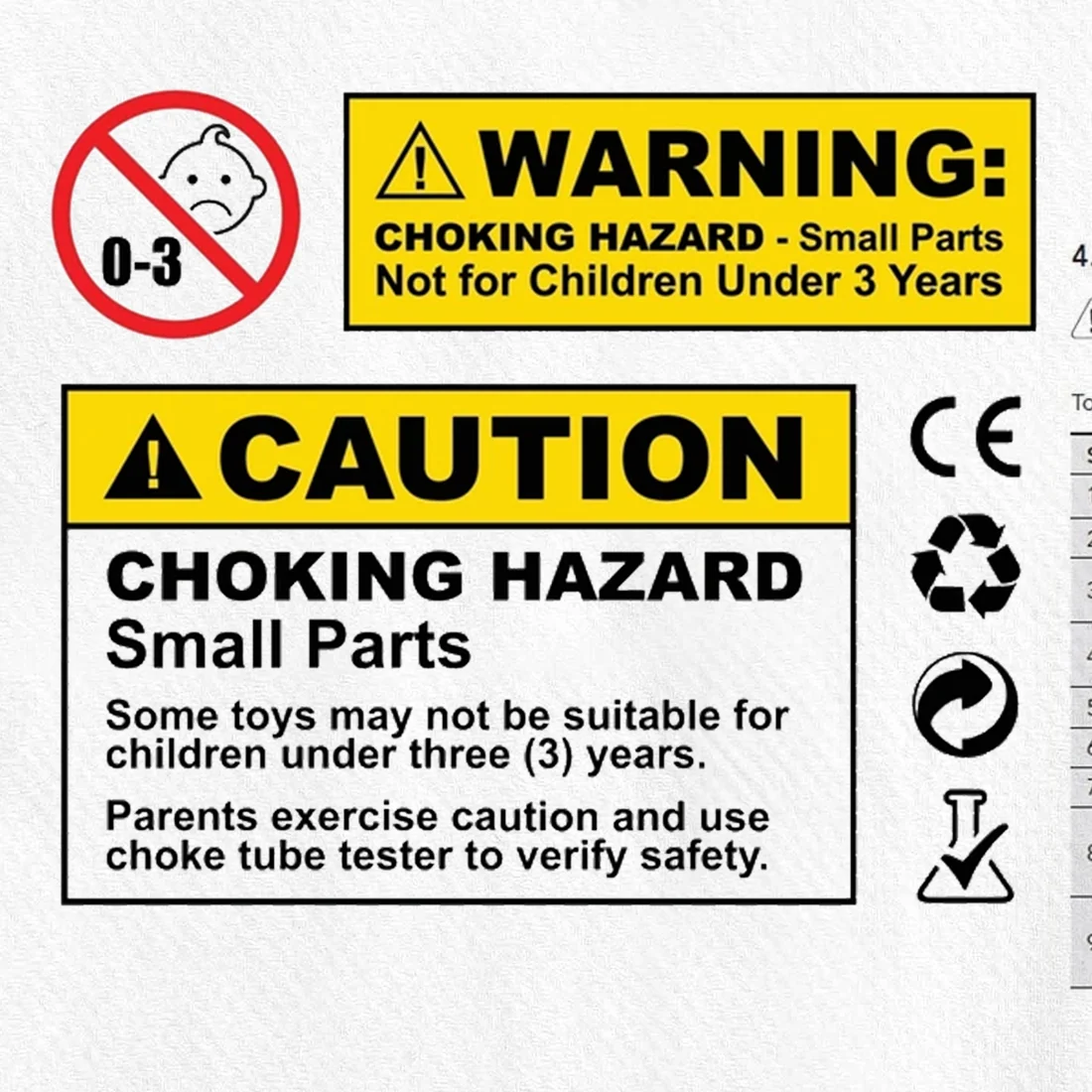
The play
Every toy sold in the European Union carries a small 'CE' mark, and many also carry a circular graphic warning that a toy is 'Not suitable for children under 36 months.' Caregivers often read the two marks as one reassurance. They are not the same thing. The CE mark and the age warning come from the same law, Directive 2009/48/EC of 18 June 2009 on the safety of toys, but they certify different things, and the European Commission's own guidance, as retrieved on 16 September 2026, is explicit about what each one means for a shopper standing in an aisle.
What the evidence says
The Commission's toy safety page states plainly that all toys sold in the EU must carry a CE marking, and that the marking represents the manufacturer's own declaration that the toy satisfies the directive's essential safety requirements — reached either by self-verification against harmonised standards or by third-party examination through a notified body. The directive text itself is separate and more specific about age. Article 11 and Annex V require that warnings determining a purchase decision, including minimum and maximum user ages, appear on the packaging or otherwise be visible before purchase, including online. Annex V's Part B sets the wording for toys unsuitable for children under 36 months and permits a graphic warning in place of, or alongside, the text.
Age fit and safety
The directive names what a user-age warning must contain: at minimum, the user's minimum or maximum age, and where relevant the required abilities, weight limits, or need for adult supervision. It says nothing about verifying that a specific toy was actually tested against that age band by an independent party unless a notified body was used; self-verification is the more common route. As retrieved 16 September 2026, the Commission's page also notes that a new EU Toy Safety Regulation entered into force on 1 January 2026, with its own requirements not applying until 1 August 2030, meaning the 2009 directive remains the operative age-warning framework described here.
What to look for
This is an editorial reading, not a certification. Treat the CE mark as confirmation a manufacturer declared compliance, not as an independent laboratory's verdict, unless the packaging separately references a notified body's certificate number. Read the specific age wording or pictogram on the box itself, since Annex V requires it to be visible before purchase, including in online listings, not only on the physical item once opened.
- Does the listing or box show the specific age wording, not just a marketing description?
- Is compliance based on self-verification or a notified body's independent examination?
- Does a stated ability or supervision requirement fit this particular child?
The CE mark and the age pictogram both originate in the same directive, but one is a manufacturer's declaration and the other is a specific, checkable warning; reading them as interchangeable reassurance overstates what either one, alone, was built to prove.
Sources & reading trail
States that CE marking is the manufacturer's declaration of compliance, describes the two conformity-assessment pathways, and notes the 2026/2030 transition to a new Toy Safety Regulation.
Source published: Not established · Retrieved: 16 September 2026
Article 11 and Annex V set the content and visibility requirements for age and user-limitation warnings, including the under-36-months wording and graphic.
Source published: 18 June 2009 · Retrieved: 16 September 2026
Standards, recall notices, studies and records establish the entry; the what-to-look-for reading is Toy Almanac editorial analysis. This retrospective draft does not imply the site published on the event date.