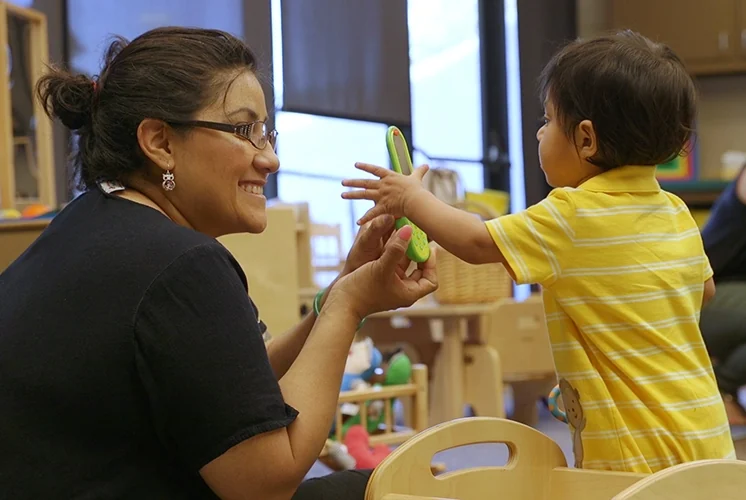
The play
The federal Office of Head Start publishes the Head Start Early Learning Outcomes Framework, describing itself on the program's own site as covering Ages Birth to Five and presenting five broad areas of early learning it calls central domains. A companion document, the Getting Started guide, names those domains directly: Approaches to Learning, Social and Emotional Development, Language and Literacy, Cognition, and Perceptual, Motor, and Physical Development, with the framework splitting language and cognition domains further for infants and toddlers versus preschoolers. The framework itself dates to 2015, when it replaced an earlier 2010 federal framework, according to the guide's own text.
What the evidence says
The Getting Started guide states that the framework's role in program planning is mandated by the Head Start Act and by the Head Start Program Performance Standards, meaning it is a federally required planning tool for Head Start grantees, not a voluntary resource. It also states the domains reflect research-based expectations for learning and development, a claim the framework makes about its own construction rather than a citation to a specific single study; the guide does not present the framework as a randomized outcome trial. Most notably, the guide includes its own explicit disclaimers under the heading of what the framework is not, stating it is not a curriculum, not an assessment tool, and not a developmental checklist, while guiding the selection of curricula and assessments.
Age fit and safety
The framework's own age structure separates infant and toddler domains from preschooler domains, both within the overall birth-to-five span, and is meant to build continuity in programming across that range rather than to grade any single product. Because the guide itself states the framework is not a developmental checklist, using it to judge whether a specific toy suits a specific child would extend the document well past the purpose its publisher assigns it.
What to look for
This is an editorial translation for a household audience, since the framework was written for program staff. The five named domains are a reasonable lens for noticing the range of what unstructured and guided play can support, from approaches to learning and social-emotional development through physical development, but the framework's authors built it for curriculum planning and teaching practice inside a federally regulated program, not for consumer toy grading.
- Is a claim about the framework being used the way the document itself says it should be used, as a planning guide rather than a checklist?
- Which of the five domains is a given play activity actually engaging, according to the framework's own domain descriptions?
- Is the infant/toddler or the preschooler domain set the relevant one for this child's age?
Head Start's own guide is unusually direct about the limits of its framework, spelling out what it is not as clearly as what it is. That built-in caution is worth carrying into any household use of the same five domains.
Sources & reading trail
Office of Head Start's own page stating the framework covers ages birth to five, presents five central domains, and shows the continuum of learning for infants, toddlers, and preschoolers.
Source published: Not established · Retrieved: 16 September 2026
The guide naming the five domains, its infant/toddler versus preschooler domain split, its mandated program-planning role, and its explicit statement of what the framework is not.
Source published: 1 January 2015 · Retrieved: 16 September 2026
Standards, recall notices, studies and records establish the entry; the what-to-look-for reading is Toy Almanac editorial analysis. This retrospective draft does not imply the site published on the event date.