The play
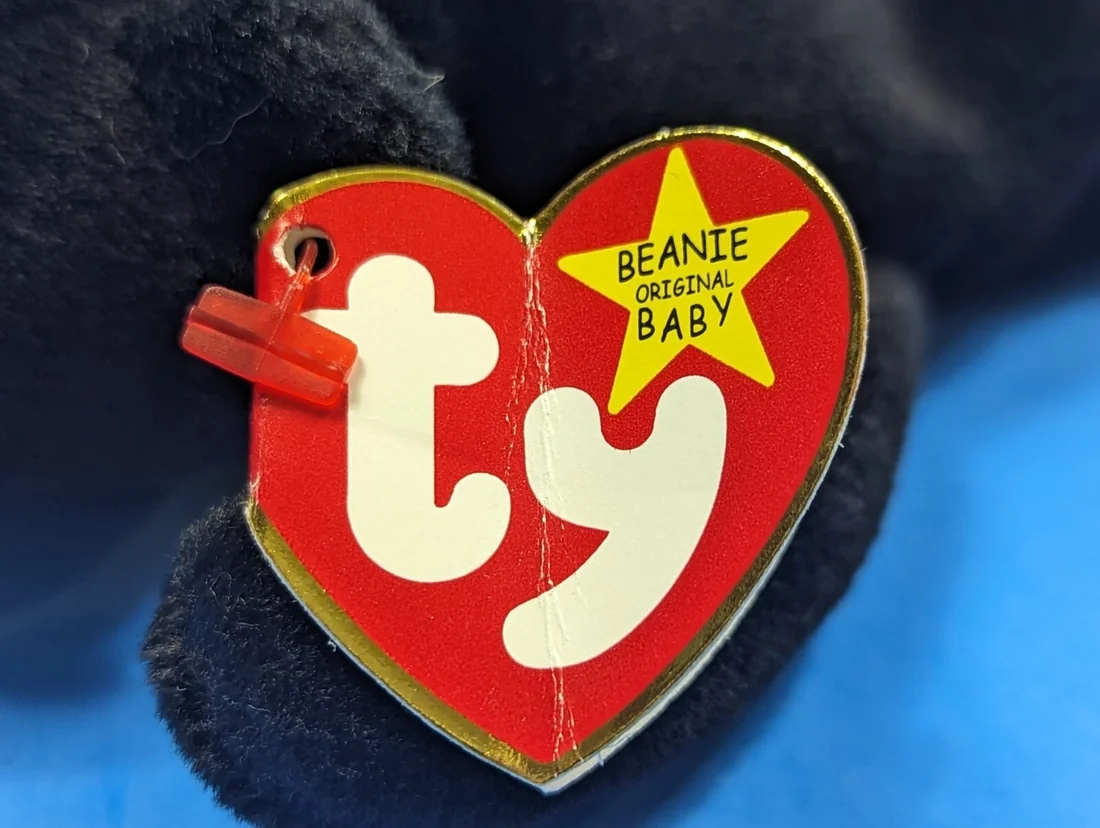
The toy is a small, bean-bag-filled plush animal, sold individually at a modest price rather than as part of a boxed collection. Ty Inc.'s own current website, retrieved 16 September 2026, states that the company was founded in 1986 and that it has been 'the heart and soul' behind Beanie Babies 'for over three decades,' a manufacturer's own characterization of its history rather than an independently audited timeline. A caregiver or gift buyer meeting a Beanie Baby meets a small, soft, single-character toy that was also, distinctively, sold as part of a line that periodically stopped being made.
What the evidence says
A US trademark record for The Beanie Babies Collection, registered to Ty Inc., states a first use in commerce dated November 1993, the most specific dated evidence available here for when the line entered the market, distinct from the company's own looser 'over three decades' framing on its current site. A Wayback Machine capture of Ty's own website, archived 3 June 2004, shows the company hosting dated retirement pages naming specific designs as discontinued, documenting that Ty operated a retirement practice on its own site by the mid-2000s, without this entry dating when that practice began or pricing any collectible's resale value.
Age fit and safety
None of the three sources sets an age range or reports a hazard finding for the toys. A small, bean-filled plush toy raises the kind of small-parts and fill-material considerations general toy-safety standards address, but no such standard is examined in this entry, and readers should check a given toy's own current age label rather than infer one from a trademark filing or a company's retirement notice.
What to look for
This is editorial: the 1993 trademark date is a useful anchor for judging whether a specific Beanie Baby predates or postdates the collecting boom of the later 1990s, but neither this entry nor its sources price any individual toy, and a specific resale value should be checked against a dated, contemporaneous listing rather than assumed from the toy's age alone. Because retirement was a real, company-run practice documented on Ty's own site, a toy's 'retired' status is a manufacturer classification, not by itself a safety or quality claim.
- Is a specific toy's claimed rarity documented by a dated company retirement notice, or only by a seller's word?
- Does the household value the toy as a soft companion, a collectible, or both?
- What does the toy's own current packaging, if new, state about age and small parts?
The dated record is narrower than the collecting boom's reputation: a trademark filing places commercial use in November 1993, and an archived company web page shows a real retirement practice by 2004, while any specific dollar value attached to a retired design belongs to contemporaneous market reporting this entry has not itself verified.
Sources & reading trail
USPTO trademark record for Ty Inc. recording first use in commerce in November 1993.
Source published: 28 February 1996 · Retrieved: 16 September 2026
Manufacturer's own current statement that Ty Inc. was founded in 1986 and has made Beanie Babies for over three decades.
Source published: Not established · Retrieved: 16 September 2026
Archived capture of Ty's own website showing a dated retirement-announcement page, evidencing the retirement practice.
Source published: Not established · Retrieved: 16 September 2026
Standards, recall notices, studies and records establish the entry; the what-to-look-for reading is Toy Almanac editorial analysis. This retrospective draft does not imply the site published on the event date.