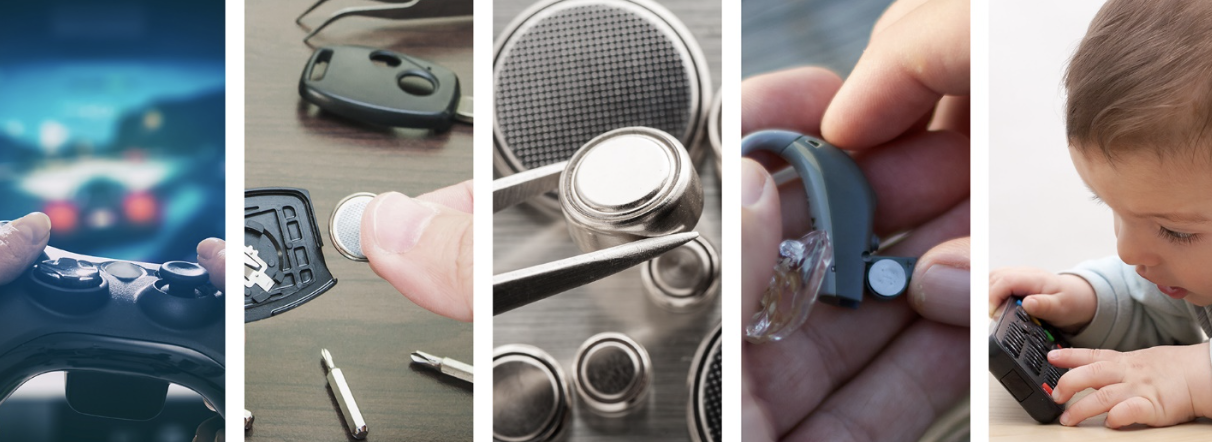
Check every battery door, control loose cells during changes, and respond immediately to a suspected button or coin battery ingestion.
Treat the compartment as part of the toy
Before a light-up book, musical toy, remote-control vehicle, or hand-me-down comes into regular use, turn it over and find the battery door. CPSC says toys with button cell or coin batteries are required to have a secure closure that needs a screwdriver, coin, or tool to open. That is a useful starting check, not a reason to stop looking: make sure the door is fully seated, its fastener is present, and the casing around it is not cracked, bowed, or loose. A toy can look cheerful and still have a compartment that has been weakened by a drop, corrosion, or an improvised repair.
Make this a handover habit as well as a purchase habit. If a toy moves between a grandparent’s house, child care, the car, and home, check it when it returns rather than assuming its battery door is unchanged. Keep spare and used button or coin batteries where a child cannot reach them. CPSC specifically advises keeping products with accessible batteries away from children when the compartment lacks a screw closure, and repairing, replacing, or disposing of a damaged product rather than leaving the cells accessible.
Sources: Button Cell and Coin Batteries · CPSC Safety Alert: Dangers with Button Cell or Coin Batteries
Make a small changing-battery routine
Choose one adult-only place for changing batteries, away from the child’s play surface. Count the old cells out and the new cells in; then look at the floor and packaging before the toy goes back. This is intentionally mundane. The point is to reduce the chance that a bright, loose disc is left behind during a rushed change. CPSC advises taping the terminals of a removed button or coin battery with non-conductive tape and taking it to a battery-collection center. Follow local collection instructions for the final disposal step.
Editorial suggestion: add a simple note to the toy’s storage bin or a household checklist: “battery door checked.” This is not a compliance certification and it cannot reveal an internal defect. It is a prompt to notice a missing screw, a door that will not close, or a toy that has become damaged. If the door does not close securely, stop offering that item for toddler play until it is repaired, replaced, or removed from access.
Sources: Button Cell and Coin Batteries · CPSC Safety Alert: Dangers with Button Cell or Coin Batteries
If a battery may have been swallowed
This is an emergency, not a watch-and-wait situation. CPSC directs caregivers to seek medical attention immediately if a button cell or coin battery is swallowed and lists the National Battery Ingestion Hotline, 800-498-8666, and Poison Help, 800-222-1222, for immediate treatment information. Keep the product or its packaging available if that can be done without delaying care; it may help identify the battery type. Do not spend time trying to determine whether the child seems unwell before making the call or seeking care.
Call the National Battery Ingestion Hotline, 800-498-8666, or Poison Help, 800-222-1222, promptly for individualized instructions, while seeking immediate medical attention. This guide deliberately omits dosing or other home measures: whether a child can swallow and the details of the ingestion or exposure matter, and the hotline or emergency team should direct the next steps.
Sources: Button Cell and Coin Batteries · CPSC Safety Alert: Dangers with Button Cell or Coin Batteries
Sources & limits
Practical setups are editorial suggestions. Research findings apply to the populations and conditions studied; they are not product tests by Toy Almanac.
- Button Cell and Coin Batteries ↗
CPSC guidance on secure battery closures, loose-cell handling, emergency contacts, immediate care, and the cited honey guidance for children 12 months and older.
Checked 2026-09-19 - CPSC Safety Alert: Dangers with Button Cell or Coin Batteries ↗
CPSC alert covering secure compartments, tape for removed cells, and Poison Help emergency contact.
Source date: 2022-09-12 · Checked 2026-09-19