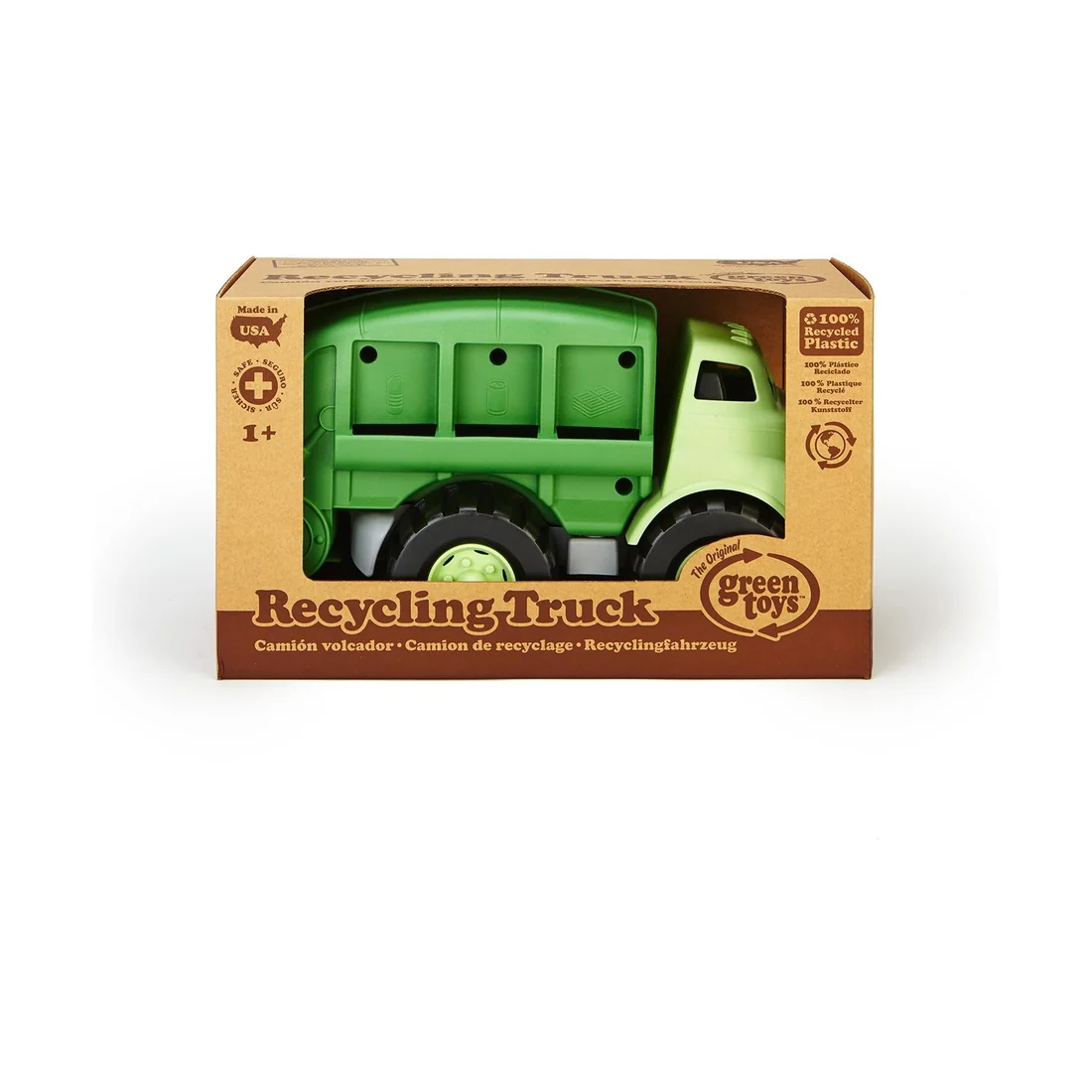
The play
Green Toys makes brightly colored play sets, vehicles, and bath toys molded from recycled plastic, sold widely in the US toy market. It is a single company's own product line, and this entry looks at what the company itself discloses about material sourcing and manufacturing, as retrieved from its own site on 16 September 2026, rather than at any independent audit of those claims.
What the evidence says
The company's own brand-story page states its toys are made from 100 percent recycled materials, and its companion philosophy page is more specific about the source, stating the plastic is primarily post-consumer recycled milk jugs, with occasional other repurposed plastics added. On manufacturing location, the brand-story page is candid about a shift over time: it states the company began manufacturing exclusively in the USA, but now produces toys in carefully selected facilities both domestically and abroad, while describing continued domestic manufacturing as central to its identity. On safety, the philosophy page states products are free of BPA and phthalates and are tested at every stage from sourcing to finished toy, but names no specific standard, laboratory, or certificate; it does not cite ASTM F963, CPSC's certificate requirement, or any named test report. These are manufacturer disclosures, not independently verified figures, and the difference matters: a company describing its own process is a different kind of evidence than a regulator's finding or a third-party test result.
Age fit and safety
Green Toys' own pages do not state an age range or a specific hazard finding for its products; age grading for a given item is a separate, product-specific label. The safety language on the philosophy page is general assurance rather than a citation to a specific regulation or test method.
What to look for
This is an editorial reading of what a manufacturer's own disclosure does and does not establish. A recycled-content claim naming a specific source material, like post-consumer milk jugs, is more checkable than a bare recycled label, though it still rests on the company's own account rather than an outside audit. A general it is tested claim is worth less than a claim that names the standard behind the test, and a caregiver who wants that citation should look for it directly on the specific product's own packaging or certificate.
- Does the recycled-content claim name a specific source material, or just say recycled?
- Is the manufacturing-location claim current, or does it describe an earlier period in the company's history?
- Does the safety claim name a specific standard, or is it a general assurance?
Green Toys' own pages are a reasonably specific manufacturer disclosure about materials, and a useful reminder that a company's account of its own process is a starting point for verification, not a substitute for a named safety citation.
Sources & reading trail
The company's own page states its 100 percent recycled materials claim and describes the shift from exclusively US manufacturing to domestic and international facilities.
Source published: Not established · Retrieved: 16 September 2026
The company's own page names post-consumer recycled milk jugs as the primary plastic source and states a general, non-standard-specific safety-testing claim.
Source published: Not established · Retrieved: 16 September 2026
Standards, recall notices, studies and records establish the entry; the what-to-look-for reading is Toy Almanac editorial analysis. This retrospective draft does not imply the site published on the event date.