The play
What was long known as the ICTI CARE Process, then the ICTI Ethical Toy Program, audits and certifies toy factories against a labor and workplace-safety code. In 2024 the organization renamed itself the Ethical Supply Chain Program, or ESCP, expanding beyond toy factories to serve other industries. A caregiver who sees an ethical toy program certification claim on packaging is looking at a factory-conditions credential, and this entry checks what that credential actually covers, as retrieved from the organization's own site on 16 September 2026.
What the evidence says
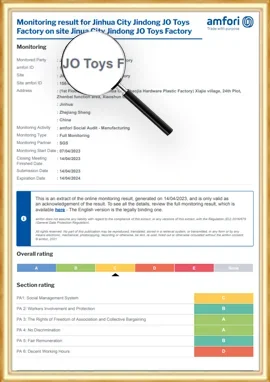
The organization's own history page traces its roots to a 1993 industry and NGO charter, the International Council of Toy Industries' 1995 Code of Business Practices, the 2004 ICTI CARE Foundation, and the 2024 rename to ESCP, describing the change as reflecting demand for compliance services across whole supply chains, not toys alone. Its certification overview page states the audit scope specifically: business ethics, employment practices, working hours, compensation, forced labor, discrimination, and grievance mechanisms, plus facilities, fire and emergency preparedness, and environmental health and safety. Nowhere in that scope description does chemical testing, heavy-metal content, or product material-safety analysis appear; the audit is about how a factory treats its workers and manages workplace hazards, not about what is in the toys it makes. The organization's own homepage frames its work as social auditing and worker well-being, reinforcing the same boundary.
Age fit and safety
This program names no age range for children and makes no product-safety finding; its subject is adult factory workers and workplace conditions. A certified factory's product still needs its own separate chemical and mechanical safety testing under a standard like ASTM F963 or the relevant EU rules, a distinction the certifier's own materials draw explicitly.
What to look for
This is an editorial reading of the program's own stated scope. A factory-ethics certification is worth reading as evidence about labor conditions and workplace safety where the toy was made, a genuinely separate and valuable fact, not as a proxy for whether the toy itself is chemically or mechanically safe. Those two questions need two separate citations.
- Does the certification claim describe factory labor and workplace conditions, or product material safety?
- Is the certifying body's own scope statement specific about what is and is not audited?
- Am I treating a labor-conditions credential as if it also certified the finished toy's safety?
The organization's own name change in 2024, from a toy-specific program to a cross-industry supply-chain one, underscores that its lineage has always been about how a factory operates, not what a toy is made of or whether it passes a chemical test.
Sources & reading trail
The organization's own history page traces its lineage from a 1993 charter and the 1995 ICTI Code of Business Practices to the 2004 ICTI CARE Foundation and the 2024 rename to the Ethical Supply Chain Program.
Source published: Not established · Retrieved: 16 September 2026
The certifying body's own page states the specific audit categories (labor practices, working hours, facilities, environmental health and safety), with no mention of product material or chemical testing.
Source published: Not established · Retrieved: 16 September 2026
Standards, recall notices, studies and records establish the entry; the what-to-look-for reading is Toy Almanac editorial analysis. This retrospective draft does not imply the site published on the event date.