The play
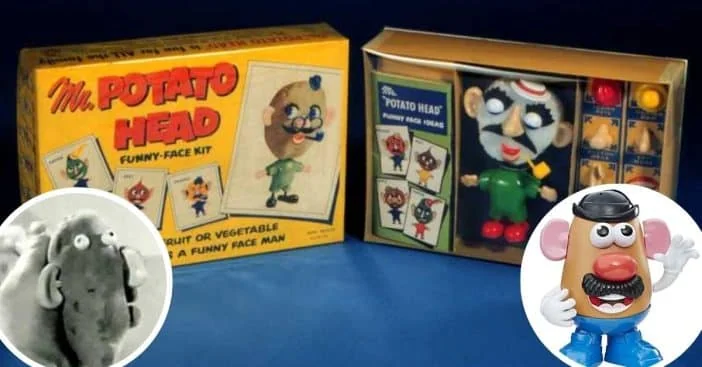
Mr. Potato Head is a set of plastic facial features, eyes, ears, a nose, a mouth, and other pieces, meant to be pressed into a head so a child can build a silly face. The National Toy Hall of Fame's record credits inventor George Lerner with the original idea, describing his face parts as a novelty first offered as a bonus in cereal-box promotions before Hassenfeld Brothers, the company later renamed Hasbro, acquired the creation in 1952. The museum's account of the original package lists 28 different plastic facial features along with a Styrofoam head for practicing expressions, a version distinct from the plastic potato body the museum says arrived later, in 1964.
What the evidence says
The museum's record makes a specific claim about advertising history: it states that the Mr. Potato Head television commercial was 'the first ever for a toy' and helped Hasbro earn more than $4 million in sales within its first few months. A Smithsonian National Museum of American History collection record for a Mr. Potato Head Family set corroborates Lerner's role, listing his name on the object's credit line, and separately names Hasbro as the maker, though that item is dated 1984 rather than the original 1952 release, so this entry treats it as confirmation of who is credited rather than a description of the 1952 product.
Age fit and safety
Neither record gives a numeric age range for the 1952 toy. The museum's description, small plastic facial pieces meant to be pressed into a head, is itself a small-parts profile a caregiver of a child who still mouths toys should weigh, a consideration this entry draws from the physical description rather than a hazard finding either source states. The shift the museum records, from a practice Styrofoam head to a plastic potato body by 1964, changed the toy's form without either source stating a safety reason.
What to look for
This is editorial guidance: a set built from small, pressable plastic pieces generally suits a child old enough to reliably keep parts out of their mouth, and a caregiver buying a current set should check the manufacturer's present-day age label rather than infer one from the 1952 account. A vintage set from before the 1964 plastic-body change, or one still packaged with its Styrofoam head, is better treated as a collectible than handed to a young child as an everyday toy.
- Are the pressable facial pieces on this set large enough for a child who still mouths small objects?
- Does a current set's age label match the child's actual age?
- Is a vintage Styrofoam-head set intended for display rather than a young child's toy box?
A cereal-box bonus became, by Hasbro's own museum-credited account, the toy behind the first television commercial ever made for one, a milestone in how toys are sold as much as how they are played with.
Sources & reading trail
National Toy Hall of Fame record for Lerner's design, Hasbro's 1952 acquisition, the first toy TV commercial claim, and 2000 induction.
Source published: 20 August 2021 · Retrieved: 16 September 2026
Smithsonian collection record for a 1984 Mr. Potato Head Family set credits George Lerner and names Hasbro as maker, corroborating the museum's attribution.
Source published: Not established · Retrieved: 16 September 2026
Standards, recall notices, studies and records establish the entry; the what-to-look-for reading is Toy Almanac editorial analysis. This retrospective draft does not imply the site published on the event date.