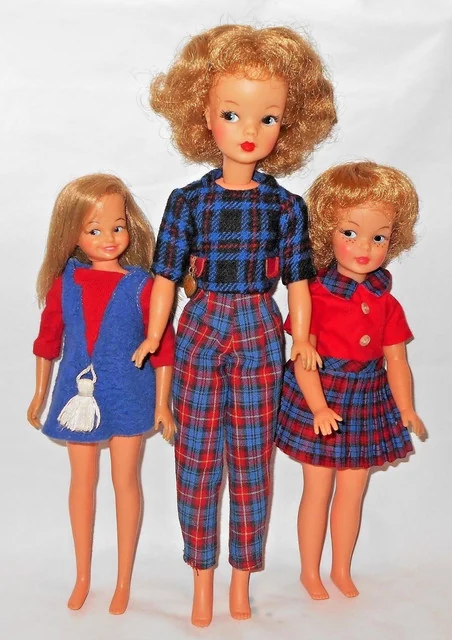
The play
Barbie is a doll built as an adult figure with an extensive wardrobe, rather than the infant-shaped baby dolls that had filled American store shelves through the 1950s. The National Toy Hall of Fame's record credits Mattel cofounder Ruth Handler with the idea, saying she watched her daughter Barbara play with paper dolls and concluded that girls would enjoy a three-dimensional version of the same grown-up, dress-up play. A Smithsonian National Museum of American History collection record corroborates the account in near-identical language, stating that 'in 1959 the Mattel toy company introduced the Barbie Doll' as a 'teenage fashion model who could date, drive, and wear fabulous clothes,' and lists Ruth Handler as the doll's originator.
What the evidence says
Both sources agree on the essential claim, that Mattel introduced Barbie in 1959 as a grown-up fashion doll, and on Ruth Handler's role, but neither record this entry opened states a specific launch date or names the toy fair often associated with the debut, so this entry reports the year only. The museum's record adds a business claim not repeated in the Smithsonian's record: that Barbie became 'the biggest selling fashion doll of all time' within a year of her introduction. The Smithsonian's own catalog entry for one early doll lists a 'ca 1958' manufacture date and a Japan production location, details about that specific object rather than the doll's public introduction, which both sources place in 1959.
Age fit and safety
Neither source states a numeric age range for the doll. The Smithsonian's record notes Barbie has been redesigned repeatedly since the 1980s to add careers and, per the museum's record, more varied representation, including dolls it describes as African American, Hispanic American, and other backgrounds introduced between 1980 and 1993; those are marketing and representation changes rather than physical-safety findings. A doll with small accessories, shoes, jewelry, tiny props, carries a small-parts consideration for a household with a much younger child, a general caution this entry raises rather than one either source states.
What to look for
This is editorial guidance: a caregiver buying a Barbie doll for a specific child can check the current box's age label, since small accessories are the main small-parts concern in a home with a younger sibling, and can decide, independent of either source, whether a doll's styling or career theme suits the child rather than assuming popularity settles that question. Both sources describe a toy that has changed considerably since 1959, so a collector's reissue of an early design is not necessarily representative of a current Barbie doll.
- Are this doll's small accessories a concern given who else has access to them at home?
- Does the specific doll's styling or theme match what this child is actually interested in?
- Is a vintage or collector's-edition doll meant for display rather than everyday play?
A mother's observation of paper-doll play, turned into a grown-up doll with a full wardrobe, became within a year, by the museum's own account, the best-selling fashion doll Mattel had made.
Sources & reading trail
National Toy Hall of Fame record credits Ruth Handler with the concept and dates Barbie's introduction to 1959, plus 1998 induction.
Source published: 20 August 2021 · Retrieved: 16 September 2026
Smithsonian collection record states Mattel introduced the Barbie Doll in 1959 and names Ruth Handler as originator, corroborating the museum's account.
Source published: Not established · Retrieved: 16 September 2026
Standards, recall notices, studies and records establish the entry; the what-to-look-for reading is Toy Almanac editorial analysis. This retrospective draft does not imply the site published on the event date.