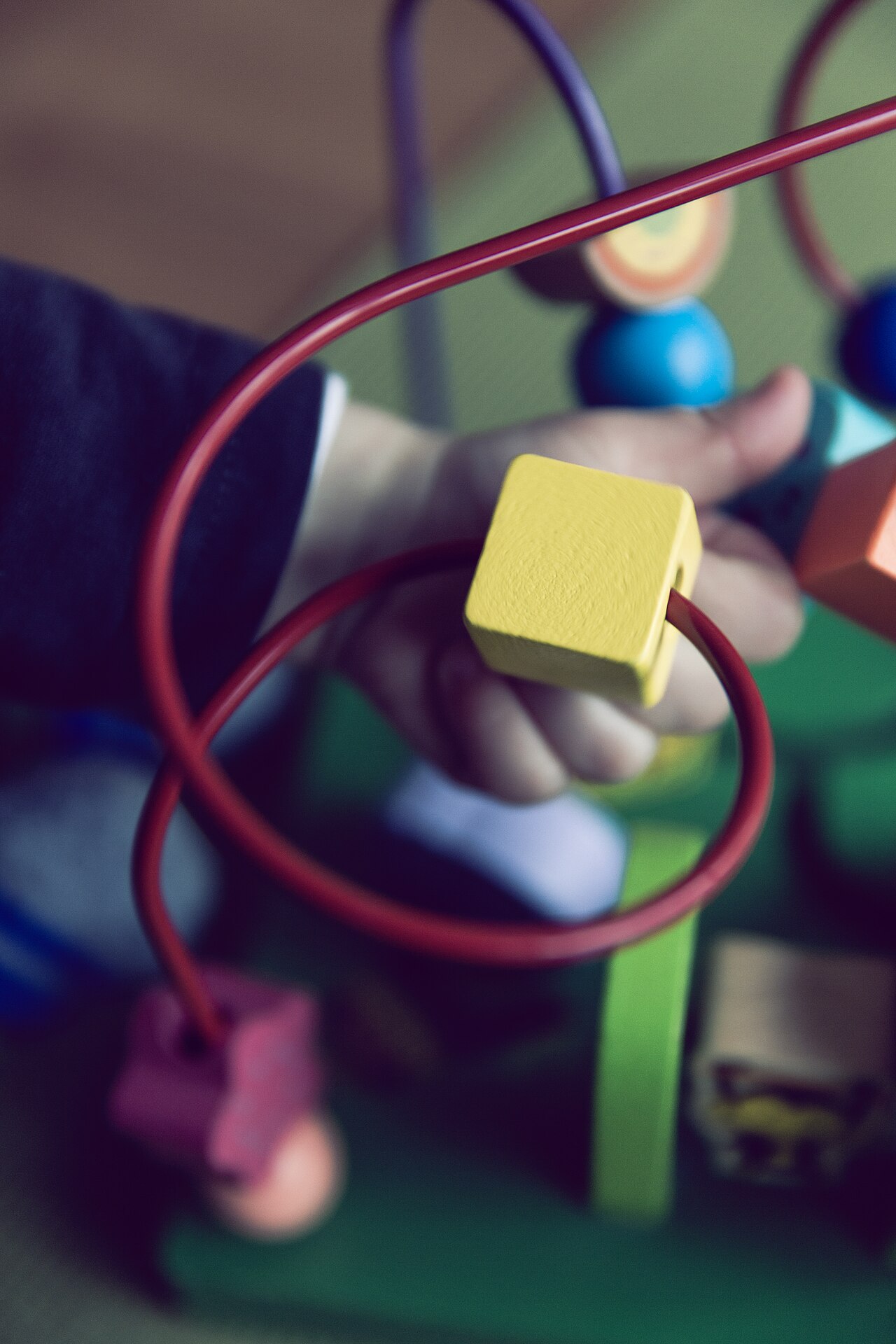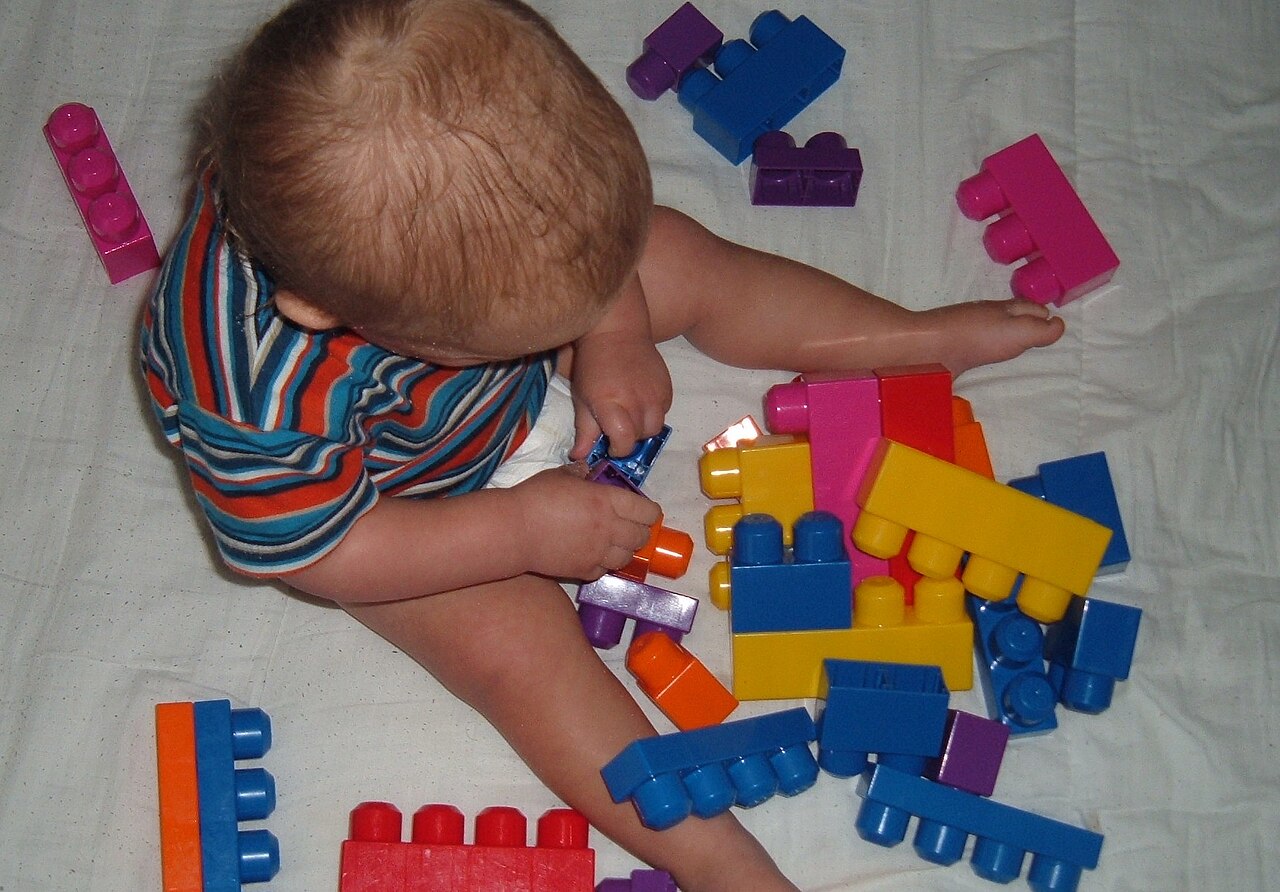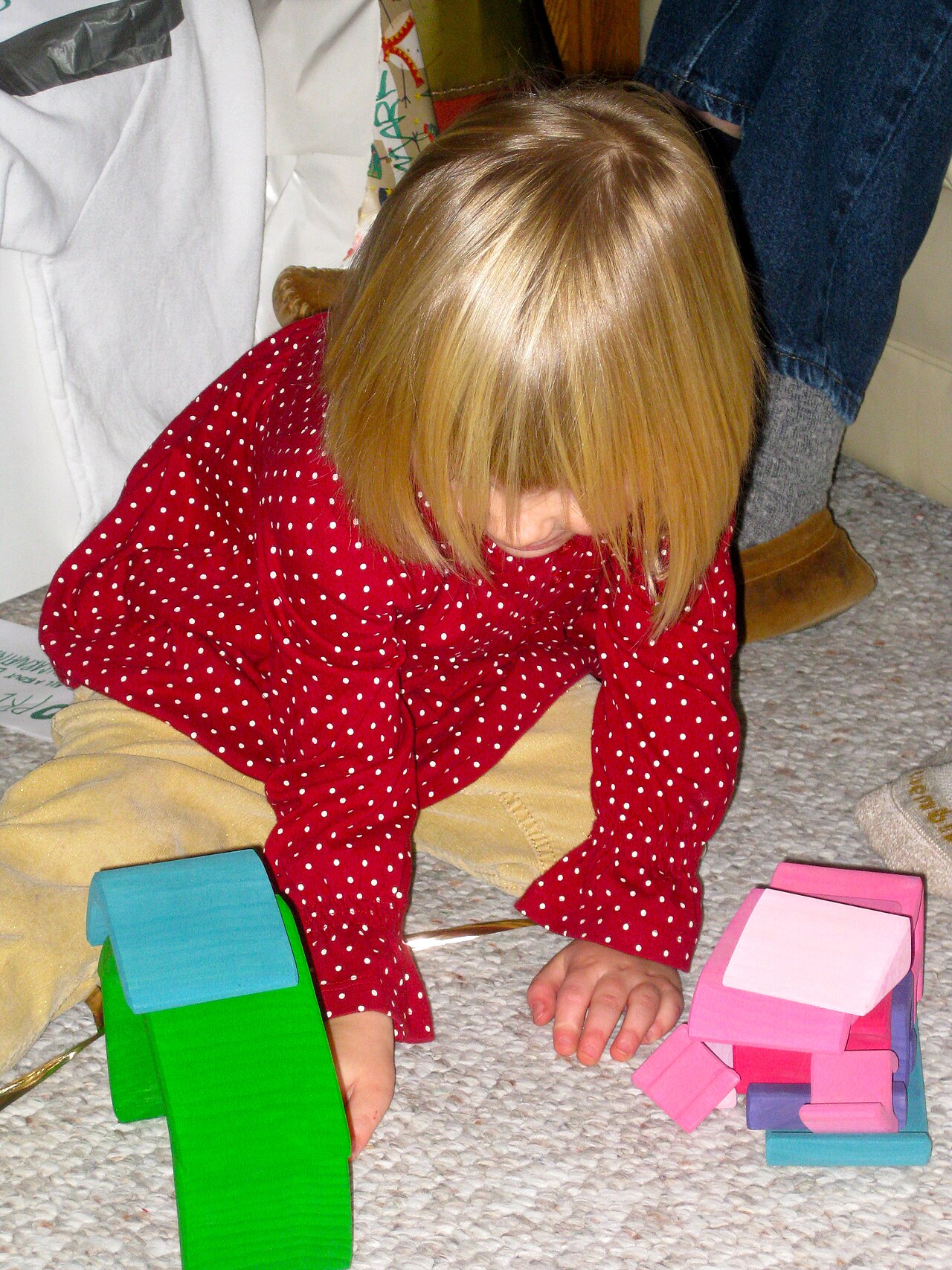
One safe ball, a short clear lane, and a patient adult can make a small room feel play-ready.
Make a small lane
You do not need a large yard for ball play. Clear a short lane between two adults, a wall and a caregiver, or two cushions set well away from furniture edges. Sit facing the child and roll one soft, large ball slowly. Pause after each roll so the child can stop it, reach for it, push it back, or simply watch. The repeated back-and-forth is the game; a successful catch is not required.
CDC’s 18-month suggestions include rolling balls back and forth, and its two-year milestone page lists kicking a ball among movement examples. Those pages describe what many children do by a given age and offer activities, not a schedule to train toward. A child who prefers carrying, dropping, or chasing the ball can still join this ordinary play in their own way.
Sources: Milestones by 18 Months · Milestones by 2 Years
Change the action, not the amount of equipment
Editorial suggestion: use the same ball for three very short games. First, roll it through a ‘tunnel’ made by your spread legs. Next, ask the child to put it in a laundry basket or open box. Finally, put two pieces of tape on the floor and invite a gentle kick or push from one line toward the other. Name what is happening—‘fast,’ ‘slow,’ ‘under,’ ‘stop’—only if conversation feels welcome, not as a quiz.
For a child who is not steady on their feet, keep the activity seated and roll within reach. For a child who is moving fast, move fragile items out of the lane and make the goal a wall, cushion, or adult hands rather than a sibling. Short rounds make it easier to stop before the room, and everyone in it, gets overstimulated.
Sources: Milestones by 18 Months · Milestones by 2 Years
Keep the ball and setting safe
Use a ball large enough for the child’s age and current mouthing behavior, in good condition, and intended for young children. Do not improvise with marbles, water beads, balloons, or balls that can break into small pieces. Check for tears, loose plugs, and damage before play. Keep this activity away from stairs, open doors, kitchens, and hard corners when a child is running or kicking.
CPSC advises caregivers to follow toy age labels and to watch for choking and other hazards. That matters even in a playful, low-cost setup. A soft ball is not automatically safe in every form or for every child. The practical aim is a low-speed shared game in a prepared space, not a trick shot or a milestone demonstration.
If the room becomes too busy, put the ball away before someone trips over it. Ending after a few satisfying rolls is a success. A child can return to the same game later, which is often more useful than extending it until attention or safety has already slipped. Put the same ball in the same place afterward so the child can anticipate where the game begins next time.
Sources: Toy Safety
Sources & limits
Practical setups are editorial suggestions. Research findings apply to the populations and conditions studied; they are not product tests by Toy Almanac.
- Milestones by 18 Months ↗
CDC page includes parent activities such as rolling balls, simple toy play, and putting blocks in and out of containers; it is not a toy prescription.
Source date: 2026-05-15 · Checked 2026-09-19 - Milestones by 2 Years ↗
CDC page includes kicking a ball and examples of social, movement, and simple object play; milestones describe most children, not requirements.
Source date: 2026-05-15 · Checked 2026-09-19 - Toy Safety ↗
Current CPSC consumer guidance on age labels, small parts, inspection, and common toy hazards.
Checked 2026-09-19