Keep music play simple enough for a child’s sound or movement to change what happens next.
Use a familiar song as a shared cue
A toddler music session can begin with the song you already know: a family lullaby, a greeting tune, or a made-up two-line chant about shoes, bath time, or a stuffed animal. Keep the pattern simple and repeat it. Head Start encourages caregivers to adapt familiar songs and to pause, wait, and watch for a child to offer a word, sound, gesture, or movement. The response does not have to be on beat to count as participation.
Sit close enough to see the child’s face and use an easy action: tap knees, wave a scarf-sized cloth only while directly supervised, sway, clap, or march in place. If the child copies one movement, repeat that one. If they walk away, continue quietly or stop. Music play is an invitation to join, not a performance and not evidence that a child has learned music, language, or self-control.
Sources: Using Music with Infants, Toddlers, and Their Families · Serve and Return: Back-and-forth exchanges
Let the child choose the variation
Editorial suggestion: use one song in three versions—slow, ordinary, and very quiet—and let the child show which one to repeat. You can sing ‘hello, hello’ with their name, pause before the final word, or make an animal move while you sing its sound. A child can choose by pointing, moving, handing you a toy animal, or doing nothing. Follow the clearest signal you have rather than prompting until they answer.
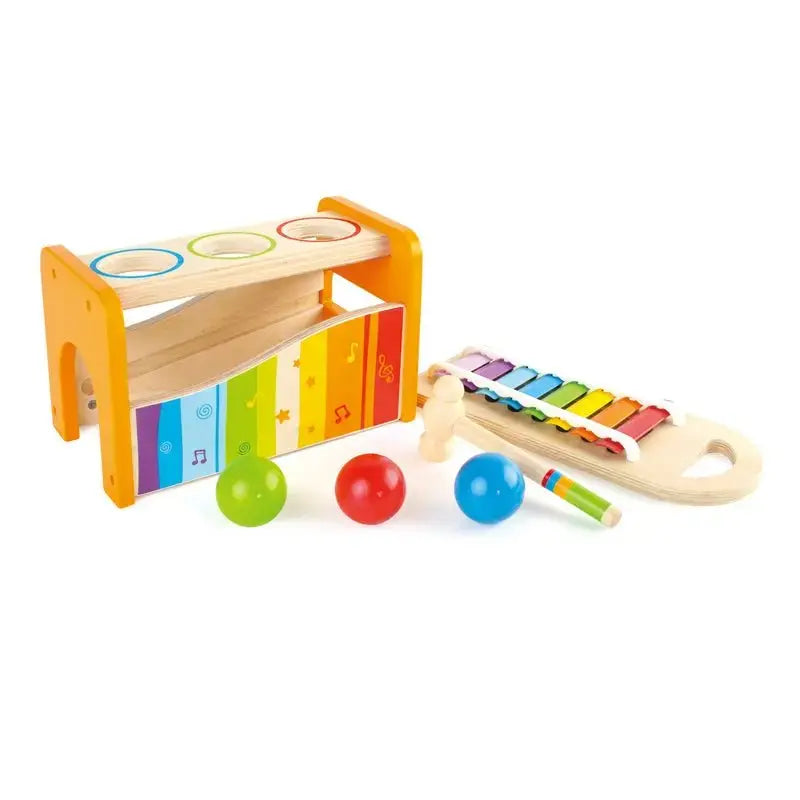
A countertop, tin, or household object is not automatically a toddler instrument. Instead of constructing homemade shakers or using loose fillings, keep the activity with body percussion, adult singing, or a durable age-appropriate instrument with no detachable small parts. A toddler does not need a set of instruments to experiment with sound and movement alongside an adult.
Sources: Using Music with Infants, Toddlers, and Their Families · Toy Safety
Protect hearing and the mood
Keep music at a conversational volume and choose a place where a child can move without crashing into furniture. If the child covers their ears, stiffens, becomes distressed, or starts throwing an instrument, lower the intensity or end the game. Some days a quiet hum while cuddling will be the whole activity. That is enough.
Head Start describes music as useful when it is intentional rather than simply playing all day. In a home, intentional can be very small: one song before a change of activity, a few minutes of dance, then silence. The value is in the shared attention and the child’s chance to act, listen, and respond—not in replacing an adult voice with an electronic feature.
You also do not have to sing confidently. A repeated rhythm, a gentle hum, or the same simple words each day can be enough. Let the child’s interest decide whether the next round is louder, slower, sillier, or finished. If you are sharing a song from your family, you do not need to explain its meaning before singing it; the shared sound can come first.
Sources: Using Music with Infants, Toddlers, and Their Families · Serve and Return: Back-and-forth exchanges
Sources & limits
Practical setups are editorial suggestions. Research findings apply to the populations and conditions studied; they are not product tests by Toy Almanac.
- Using Music with Infants, Toddlers, and Their Families ↗
Head Start resource encouraging familiar songs, adaptations, pauses, and attention to children’s responses during music experiences.
Checked 2026-09-19 - Serve and Return: Back-and-forth exchanges ↗
Center on the Developing Child explanation of responsive exchanges around young children’s sounds, gestures, and expressions; not a developmental assessment.
Checked 2026-09-19 - Toy Safety ↗
Current CPSC consumer guidance on age labels, small parts, inspection, and common toy hazards.
Checked 2026-09-19