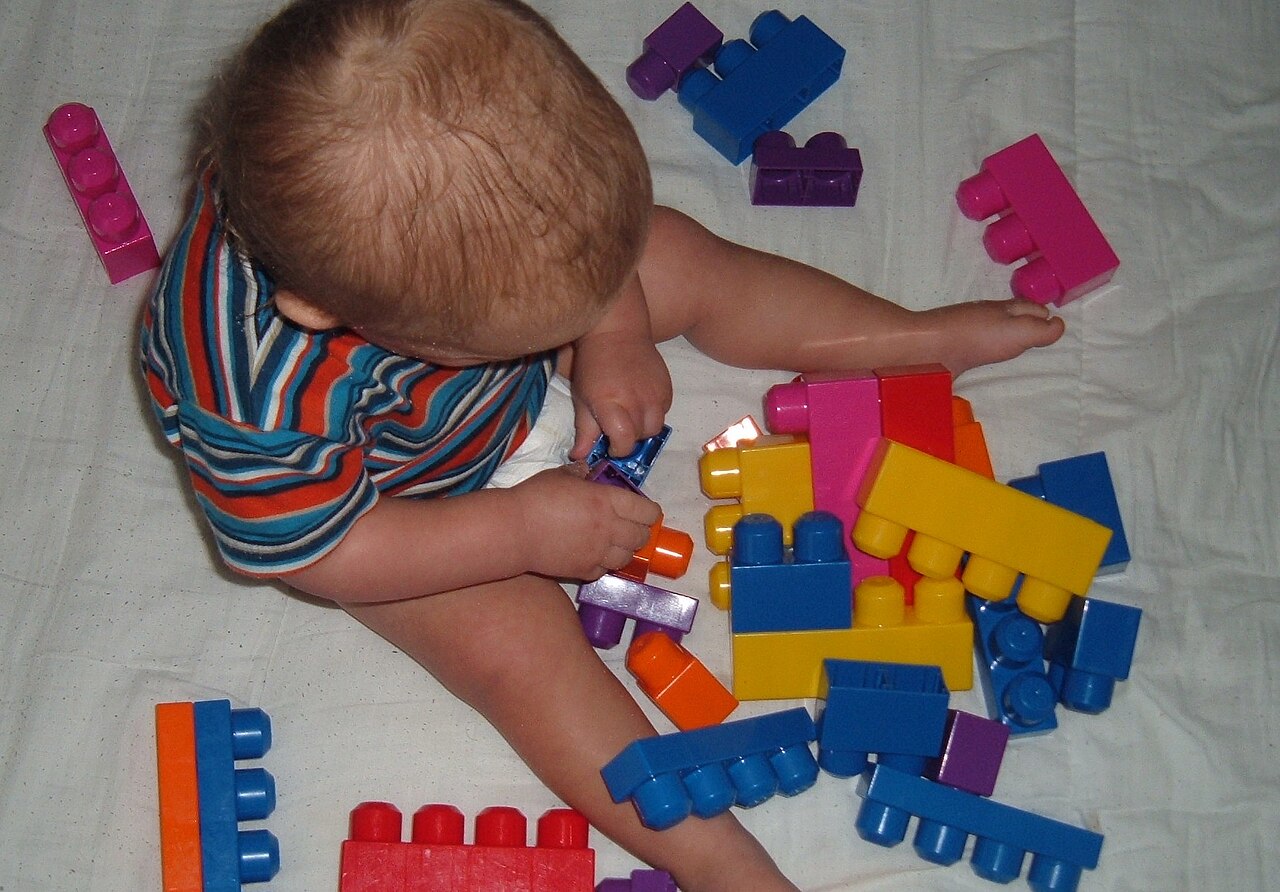
Electronic play works best when it still leaves space for a child’s action and a caregiver’s responsive turn.
What the study actually found
In a controlled in-home study, 26 parent–infant dyads with children aged 10 to 16 months played for fifteen minutes with electronic toys, traditional toys, and books. During electronic-toy play, researchers recorded fewer adult words, conversational turns, parental responses, and content-specific words than during play with traditional toys or books. Children vocalized less with electronic toys than with books.
This is an immediate interaction finding from a small volunteer sample, not proof that every electronic toy harms language or that a traditional toy automatically creates good conversation. It does make a useful question practical: when this toy is on, does it leave room for the child and caregiver to notice and respond to each other?
Use the toy, do not let it run the whole exchange
If an electronic toy is part of your home, play alongside it. Pause it when possible, name what the child is doing, imitate a sound, and add a turn that is not controlled by the toy. A button can start a song, then become a cue to dance, take turns, or make up a new verse. The goal is not to ban joy or novelty; it is to preserve agency and back-and-forth.
A toy that talks constantly may be harder to share than one with an on-off switch, adjustable volume, or a simple response. Those are usability observations, not a product rating. Notice your own household: some children ignore the sound, some are distressed by it, and some invite an adult into the game.
Sources: Association of the Type of Toy Used During Play With the Quantity and Quality of Parent-Infant Communication · Selecting Appropriate Toys for Young Children in the Digital Era
Separate electronic from connected
A battery-operated toy does not necessarily collect data, but an internet-connected toy, app, microphone, camera, or account adds privacy questions. The FTC advises asking what the product records, where information is stored, who can access it, what controls are available, and whether a parent can see and delete data. Connected toys can fall within COPPA requirements when they collect children’s personal information online.
Before connecting a toy, read the setup and privacy information, consider whether an offline mode exists, and turn off features you do not need. This is general consumer guidance, not legal advice, and rules may differ by jurisdiction.
Sources: What to Ask Before Buying Internet-Connected Toys · Complying with COPPA: Frequently Asked Questions
A proportionate conclusion
You do not need to replace every electronic toy to make room for conversation. Keep a varied set of options: books, blocks, balls, pretend props, art, and any electronic item your family enjoys. Choose moments when a child can lead the action and an adult can answer.
The evidence is strongest for the interaction measured in one short study, not for lifelong outcomes. The practical response is modest: when a toy supplies the sound, story, or answer, leave enough quiet and time for the child to supply something too.
Sources: Association of the Type of Toy Used During Play With the Quantity and Quality of Parent-Infant Communication · Selecting Appropriate Toys for Young Children in the Digital Era
Sources & limits
Practical setups are editorial suggestions. Research findings apply to the populations and conditions studied; they are not product tests by Toy Almanac.
- Association of the Type of Toy Used During Play With the Quantity and Quality of Parent-Infant Communication ↗
Controlled in-home study of 26 parent-infant dyads aged 10–16 months; measures immediate interaction, not long-term outcomes.
Source date: 2016-02 · Checked 2026-09-16 - Selecting Appropriate Toys for Young Children in the Digital Era ↗
AAP clinical report on play, caregiver interaction, toy selection, and limits of developmental toy claims.
Source date: 2019-01-01 · Checked 2026-09-16 - What to Ask Before Buying Internet-Connected Toys ↗
FTC consumer questions on recording, controls, collection, storage, access, and deletion.
Source date: 2019-12 · Checked 2026-09-16 - Complying with COPPA: Frequently Asked Questions ↗
FTC current guidance identifying connected toys as covered online services when statutory conditions apply.
Checked 2026-09-16