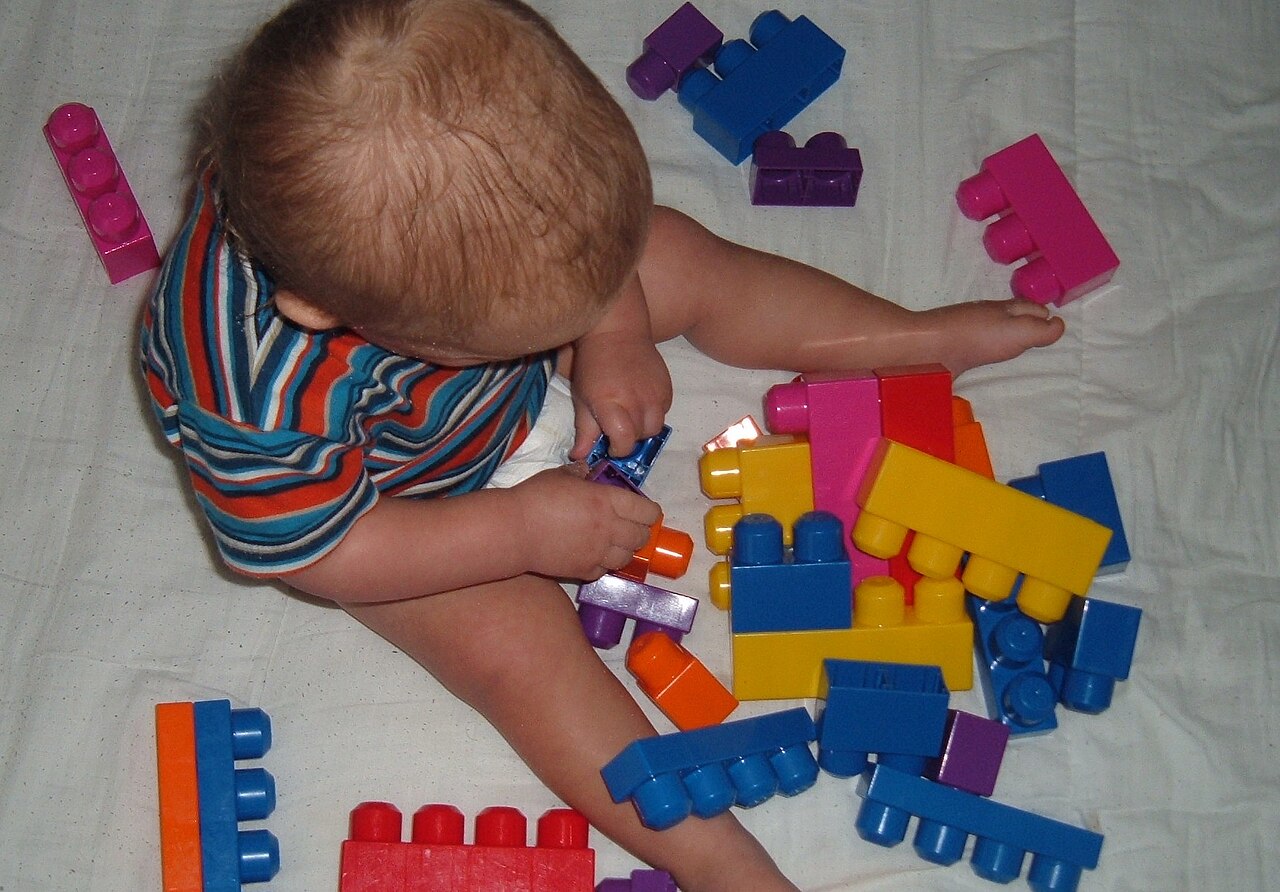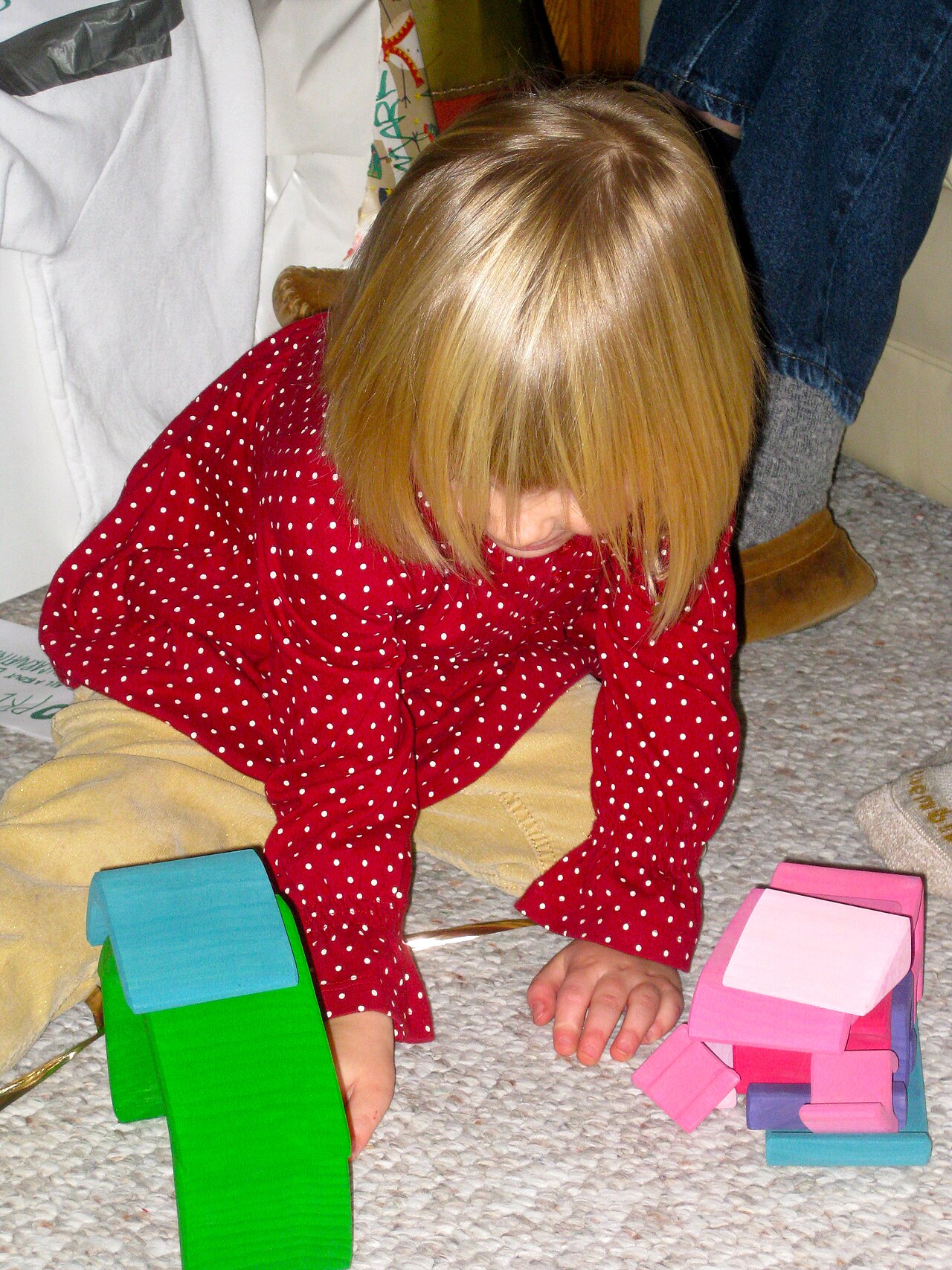
At 24–36 months, flexible materials let toddlers practice stories, movement, construction, and social play in their own changing ways.
More combinations, not a sudden leap
Between two and three, many children combine words, use objects in simple pretend routines, run and jump, and begin to notice other children’s play. A stack of blocks may become a tower, then a garage, then food for a stuffed animal. That shifting meaning is a feature of pretend and constructive play. There is no need to correct it back to the toy’s intended use.
CDC materials list examples including two-word combinations by age two, pretend feeding by 30 months, and joining other children in play by age three. These examples are useful for noticing possibilities, not a scorecard; a missing milestone or caregiver concern should prompt a health professional conversation. A child can be deeply engaged while repeating one story or one building pattern for weeks.
Sources: CDC Developmental Milestones
Materials that can grow with the child
Large construction pieces, blocks, figures or animals, vehicles, dolls, a few pieces of pretend food, washable art materials, balls, books, and simple containers offer many routes into play. Pair rather than pile: blocks and animals, a doll and blanket, cups and a basin of water with close supervision, or cardboard boxes and chunky crayons. A smaller arrangement makes it easier to see what the child returns to.
Use the child’s real interests as the starting point. A child drawn to buses may enjoy making stops with blocks; a child who watches cooking may want to serve a stuffed animal. This is not a claim that themed play teaches a particular skill. It is a way to make participation easier.
Sources: Selecting Appropriate Toys for Young Children in the Digital Era
Offer social openings without forcing sharing
When another child is present, parallel play is still real social experience. Two children may build separately side by side, copy each other, or protect their own materials. Provide duplicates of especially popular items when possible and narrate boundaries simply. For example, an adult might say, "You both want the red truck. This truck is with another child; here is another truck." Adults can model waiting and repair without making a child hand over a prized object.
Pretend play is associated with language and social-development measures, but the research does not show that a pretend kitchen or a costume causes broad future gains. What it reliably offers is a shared surface for conversation, roles, and repetition. An empty box and a spoon can be enough.
Sources: Selecting Appropriate Toys for Young Children in the Digital Era
Keep challenges adjustable
A useful activity has more than one entry point. Blocks can be lined up, balanced, sorted, or used as story props. A picture book can be read word for word, talked through from the pictures, or used to inspire a game. If a child is frustrated, reduce the number of pieces, start a structure together, or change the goal from finishing to exploring.
Check materials for the child in front of you, especially when older-sibling toys are nearby. Small pieces, high-powered magnets, and button batteries are not made safer by a child seeming advanced. Follow age labels and keep current recalls in the picture when buying or accepting toys.
Sources: CPSC Toy Safety · CPSC Recalls and Product Safety Warnings · CPSC Button Cell and Coin Batteries
Sources & limits
Practical setups are editorial suggestions. Research findings apply to the populations and conditions studied; they are not product tests by Toy Almanac.
- CDC Developmental Milestones ↗
Current milestone resource; age-band examples are population-level and not diagnostic.
Source date: 2026-02-16 · Checked 2026-09-16 - Selecting Appropriate Toys for Young Children in the Digital Era ↗
AAP clinical report on play, caregiver interaction, toy selection, and limits of developmental toy claims.
Source date: 2019-01-01 · Checked 2026-09-16 - CPSC Toy Safety ↗
Current U.S. regulator guidance for age labels, hazards, and toy safety.
Checked 2026-09-16 - CPSC Recalls and Product Safety Warnings ↗
Live U.S. recall and warning database; records and remedies can change.
Checked 2026-09-16 - CPSC Button Cell and Coin Batteries ↗
Current regulator guidance on secured compartments and ingestion risk.
Checked 2026-09-16