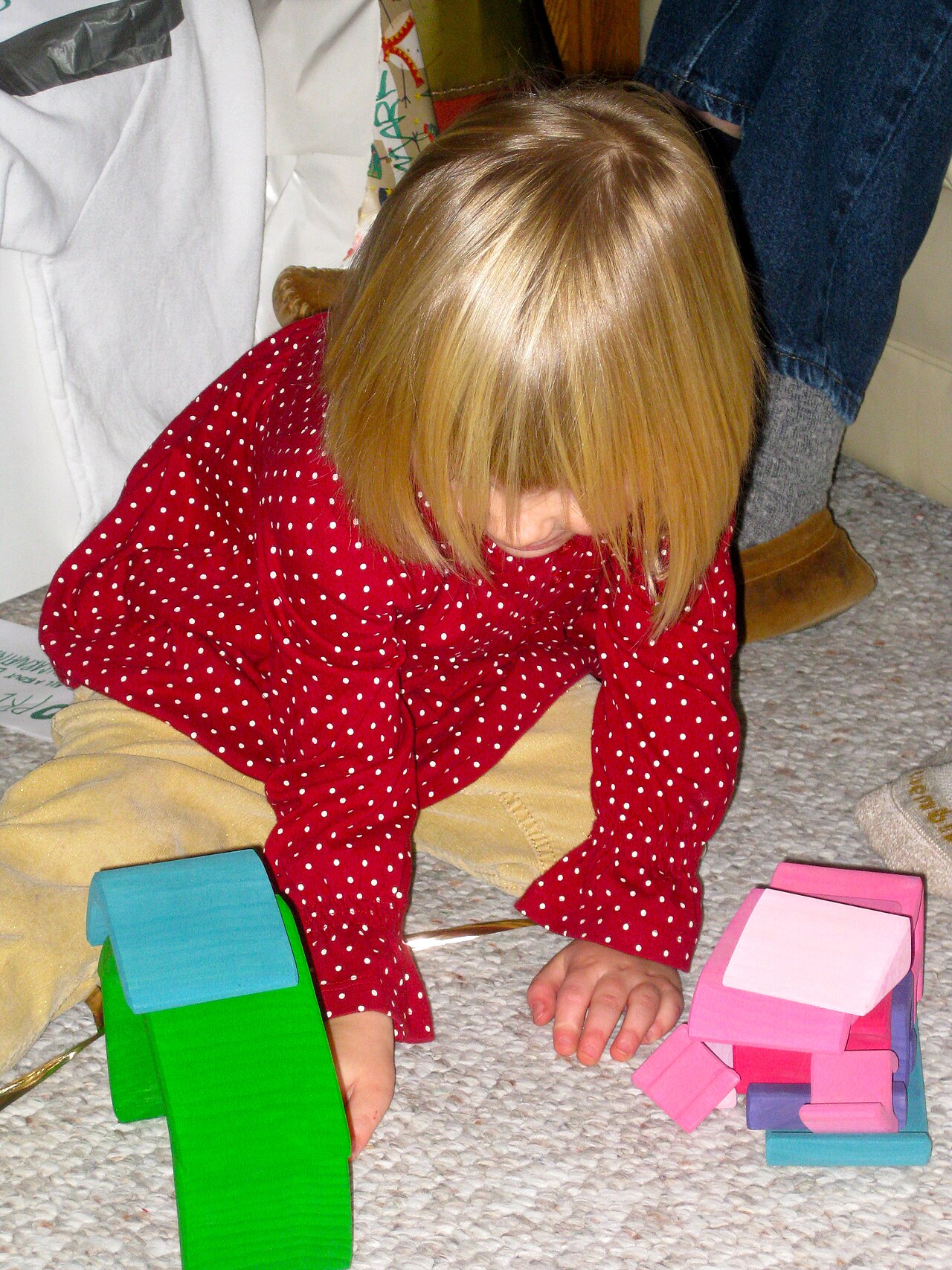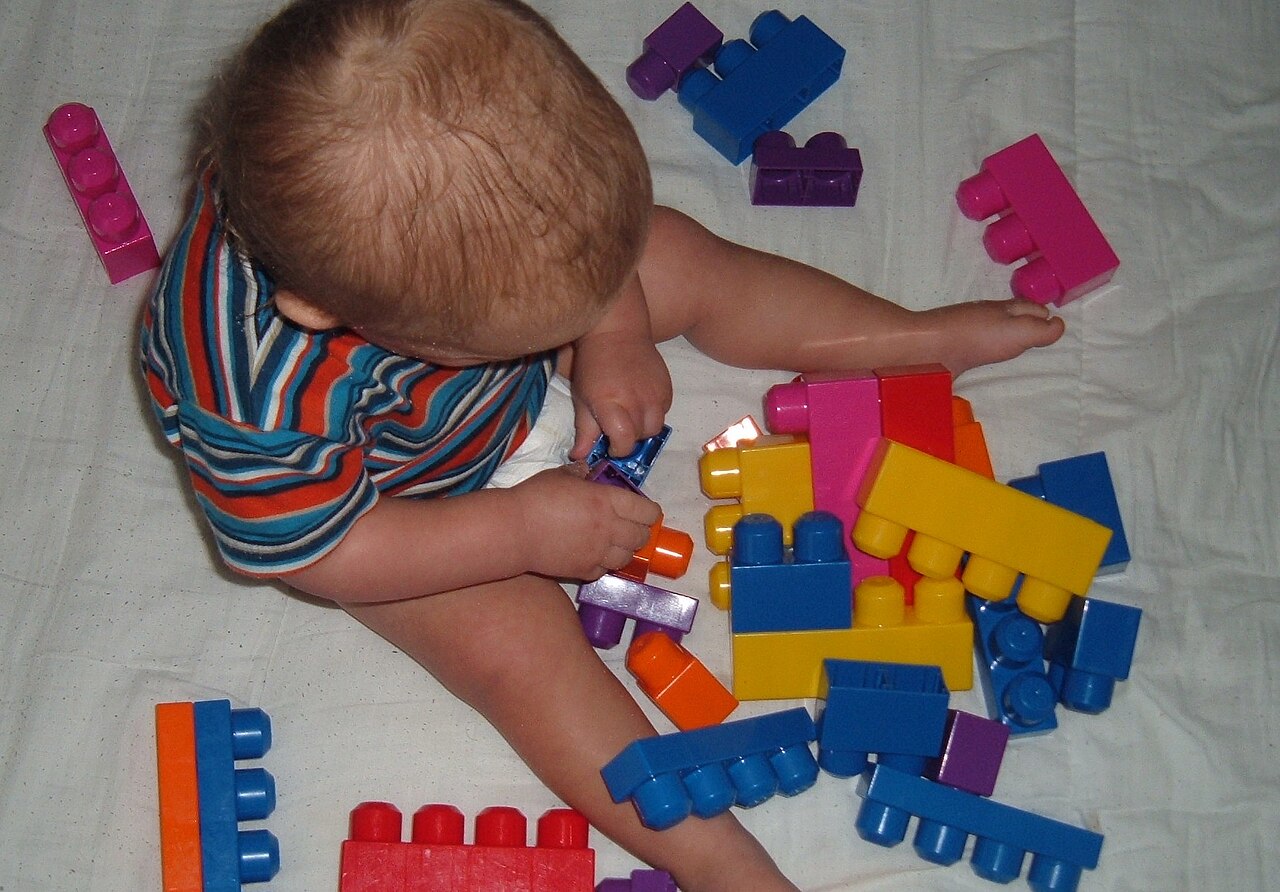
At 12–18 months, a few safe, repeatable materials and responsive company matter more than a complicated setup.
Start with what this age is doing
Between 12 and 18 months, many children are busy with a small set of big jobs: putting things in and taking them out, carrying objects, dropping them, copying familiar actions, and repeating a result that surprises them. The repetition can look plain from across the room, but it is the work. A cup going into a basket ten times is not a failed attempt at a more elaborate activity. It is a child testing grip, distance, sound, and cause and effect.
Age bands are a planning aid, not a test. CDC milestone checklists describe skills that most children reach by particular ages, while children can show skills in different ways. If a child has not reached a milestone or a caregiver has concerns, discuss that promptly with a health professional. Let the child’s current actions guide the setup. A child who is still mostly mouthing and dumping needs larger, sturdier materials than a child who is beginning to stack or imitate a phone call.
Sources: CDC Developmental Milestones · Selecting Appropriate Toys for Young Children in the Digital Era
A small, useful starting set
Try a basket with a few large cups or bowls, a soft ball, several large blocks, a board book, a doll or stuffed animal, and a safe container with a wide opening. None needs a single assigned lesson. Cups can be nested, banged together, filled with blocks, or used in a pretend drink. A ball can be rolled back and forth, carried, or dropped into a box. The value is in the child having room to choose and repeat.
Keep movement close to the play plan. A clear patch of floor, a cushion to climb over with an adult nearby, or a ball rolled a short distance may suit this stage better than an activity that asks for long sitting. Choose pieces that match the manufacturer age label and the child’s abilities. Inspect for cracks, loose pieces, exposed magnets, and accessible batteries before each use.
Sources: Selecting Appropriate Toys for Young Children in the Digital Era · CPSC Toy Safety · CPSC Button Cell and Coin Batteries
How an adult can join without taking over
Watch first. Then describe the child’s focus in ordinary language: "The block went in," "You found the cup," or "It rolled under the chair." Pause long enough for a look, sound, gesture, or another action. Imitating the child’s action can create a turn without requiring a response. If the child offers an object, treat it as communication: accept it, name it, and see what happens next.
Research and professional guidance support responsive interaction as the important context around toys. That does not mean a caregiver must narrate every minute or turn play into a lesson. Quiet independent exploration is valuable too. A useful rhythm is to be available, add a word or an idea when welcomed, and step back when concentration is doing the work.
Sources: Selecting Appropriate Toys for Young Children in the Digital Era
Limits worth keeping in view
There is no evidence-based shopping list that guarantees development, and a toy does not need to be branded educational to be useful. At this age, a toy with lights or sound is not automatically unsafe or bad; it may simply make it harder to notice the child’s own ideas or start a conversation. If an electronic toy is already part of the home, use it together and keep the child’s cues in charge.
Stop or simplify when play becomes frustrating, the child is tired, or a material no longer looks intact. If you have concerns about development, feeding, hearing, mobility, or safety, this guide is not a substitute for a pediatric or qualified professional conversation.
Sources: Selecting Appropriate Toys for Young Children in the Digital Era · CDC Developmental Milestones
Sources & limits
Practical setups are editorial suggestions. Research findings apply to the populations and conditions studied; they are not product tests by Toy Almanac.
- CDC Developmental Milestones ↗
Current milestone resource; age-band examples are population-level and not diagnostic.
Source date: 2026-02-16 · Checked 2026-09-16 - Selecting Appropriate Toys for Young Children in the Digital Era ↗
AAP clinical report on play, caregiver interaction, toy selection, and limits of developmental toy claims.
Source date: 2019-01-01 · Checked 2026-09-16 - CPSC Toy Safety ↗
Current U.S. regulator guidance for age labels, hazards, and toy safety.
Checked 2026-09-16 - CPSC Button Cell and Coin Batteries ↗
Current regulator guidance on secured compartments and ingestion risk.
Checked 2026-09-16