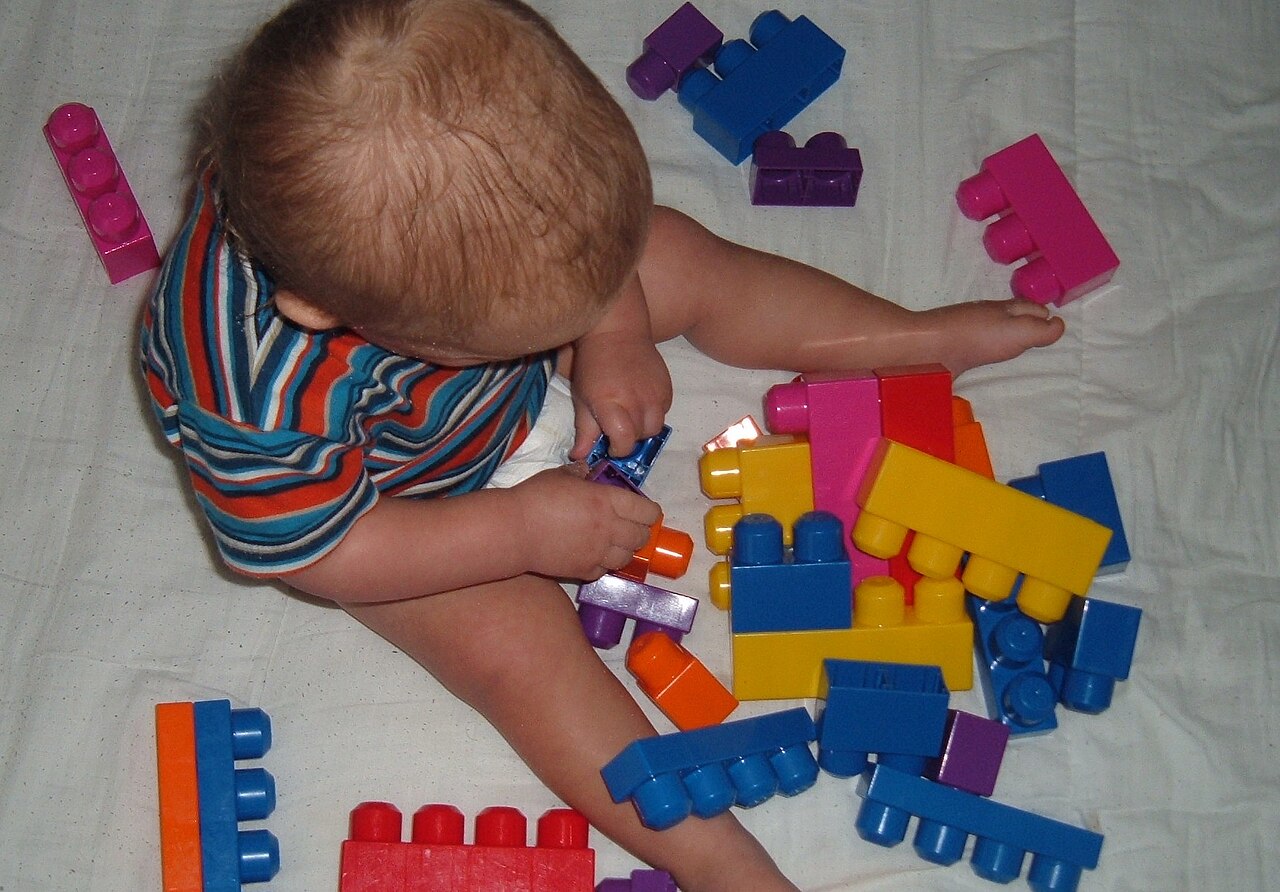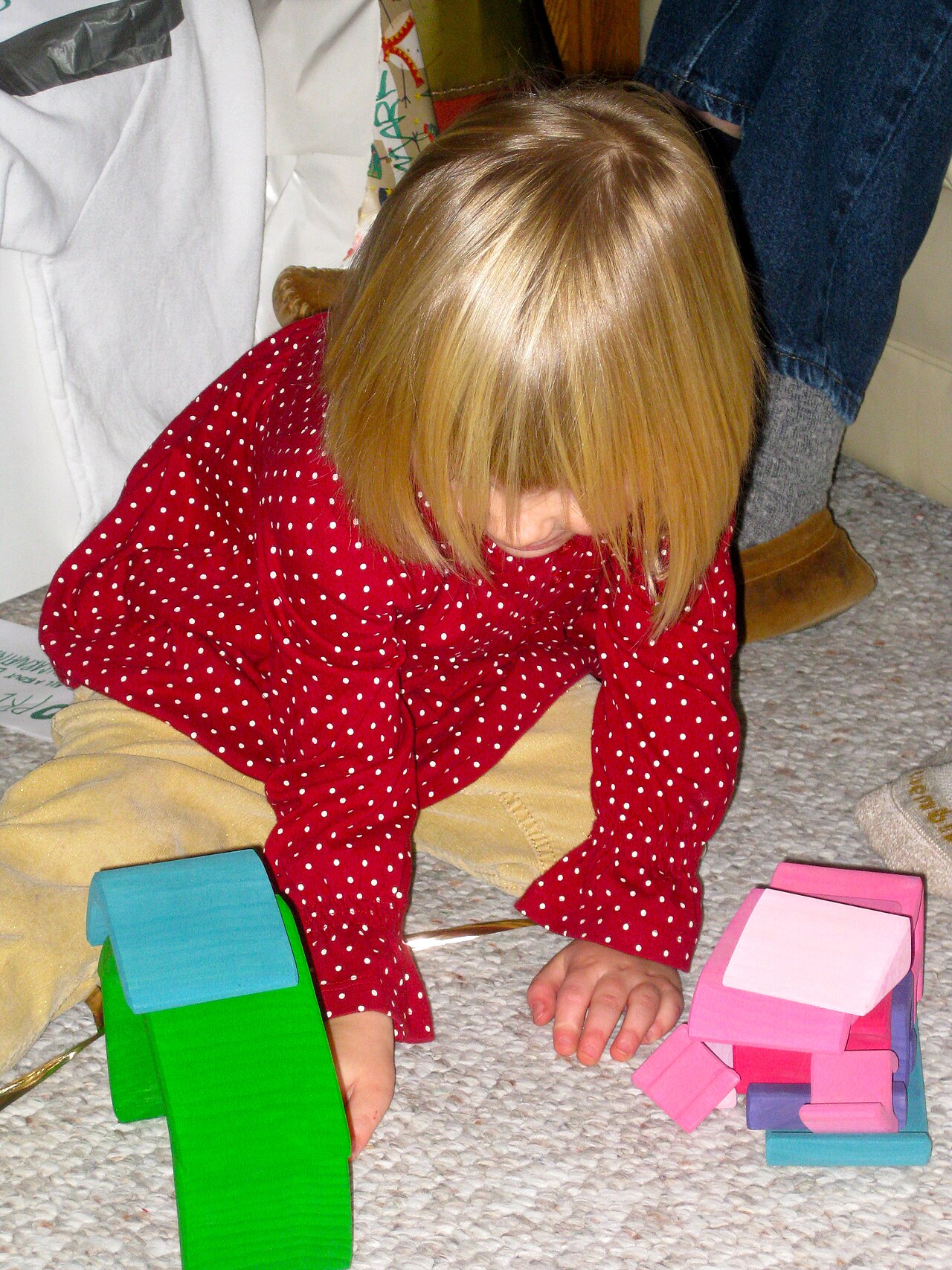
For 18–24 months, choose sturdy materials that invite copying, carrying, pretending, and trying again on the child’s terms.
A changing kind of play
From roughly 18 to 24 months, many toddlers are moving with more purpose and trying out familiar adult actions. They may carry a spoon to a doll, push a box like a cart, turn a knob, or insist on putting the last block in themselves. The urge to copy is an opening for play, not a request for perfect imitation. A block can be a phone today and a piece of toast tomorrow.
CDC milestones include examples such as copying chores around 18 months and using switches, knobs, or buttons on a toy by age two. These are broad population milestones, not a reason to dismiss a missing skill or concern; discuss either promptly with a health professional. Choose materials that meet the child where they are: easy to grasp, stable enough to resist an enthusiastic pull, and simple enough that the child can affect what happens.
Sources: CDC Developmental Milestones · Selecting Appropriate Toys for Young Children in the Digital Era
Set out invitations, not assignments
A low shelf or floor basket might hold large blocks, nesting cups, a chunky puzzle, a doll and blanket, a few vehicles, a ball, and books. Rotate only when the child has stopped using something, not because a schedule says the material has expired. One open box can become a garage, a bed, a delivery truck, or a place to put every object the child can find.
Household participation can be play too: matching socks, wiping a small table with a damp cloth, moving large fabric squares or large wooden rings between baskets, or carrying a lightweight bag. Keep small items and unsafe tools out of reach. The point is shared routine and agency, not a standard of helpfulness.
Sources: Selecting Appropriate Toys for Young Children in the Digital Era · CPSC Toy Safety
Use language that follows the child
Name what is happening rather than asking a stream of quiz questions. "You put the bear to bed" is often easier to join than "What color is the bear?" Add one small extension: "The bear is under the blanket. Shall we say goodnight?" Then wait. A gesture, sound, or return to the action is a valid answer.
This approach is a practical suggestion, not proof that any one phrase changes language outcomes. The AAP’s toy guidance emphasizes warm, responsive caregiver interaction and play that leaves room for imagining, problem-solving, and conversation. The relationship and back-and-forth are more important than owning a particular pretend-play set.
Sources: Selecting Appropriate Toys for Young Children in the Digital Era
When the setup needs a reset
If a child throws every piece, the answer is not always more discipline or a new toy. They may be exploring sound, asking for movement, or facing a task that is too hard. Offer a safer version of the same idea: soft balls for throwing, fewer blocks, a larger container, or a brief outdoor carry-and-drop game. If a puzzle triggers repeated distress, put it away and revisit later.
Safety stays specific. Follow labels, supervise appropriately, and check any battery compartment, magnet, or breakable component. A child who mouths objects, has different motor control, or plays alongside younger siblings may need a safer setup than the printed age range alone suggests.
Sources: CPSC Toy Safety · CPSC Button Cell and Coin Batteries
Sources & limits
Practical setups are editorial suggestions. Research findings apply to the populations and conditions studied; they are not product tests by Toy Almanac.
- CDC Developmental Milestones ↗
Current milestone resource; age-band examples are population-level and not diagnostic.
Source date: 2026-02-16 · Checked 2026-09-16 - Selecting Appropriate Toys for Young Children in the Digital Era ↗
AAP clinical report on play, caregiver interaction, toy selection, and limits of developmental toy claims.
Source date: 2019-01-01 · Checked 2026-09-16 - CPSC Toy Safety ↗
Current U.S. regulator guidance for age labels, hazards, and toy safety.
Checked 2026-09-16 - CPSC Button Cell and Coin Batteries ↗
Current regulator guidance on secured compartments and ingestion risk.
Checked 2026-09-16