Use rotation as a flexible way to make choices easier, not as a developmental rule or a measure of good parenting.
What one toddler study found
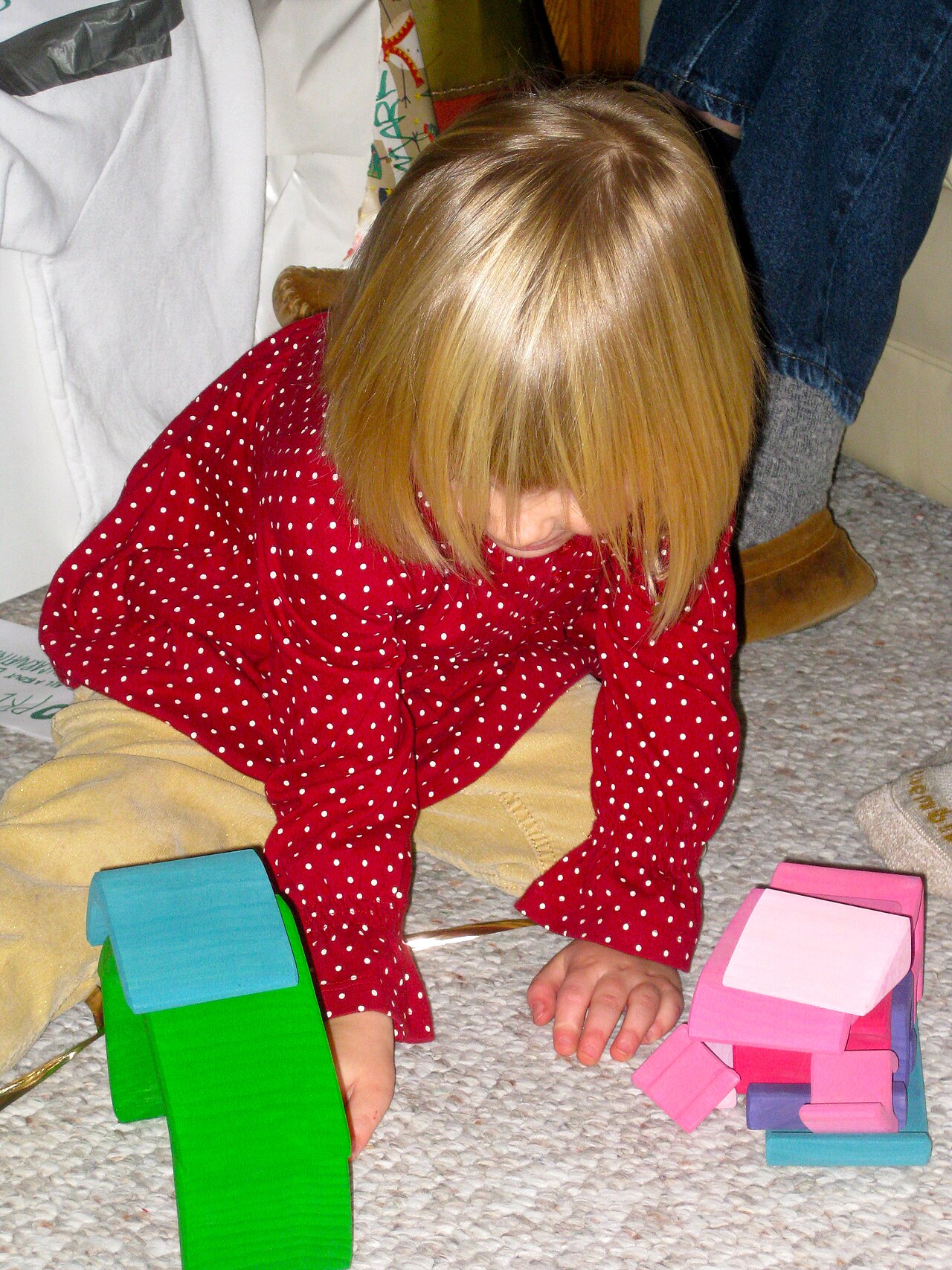
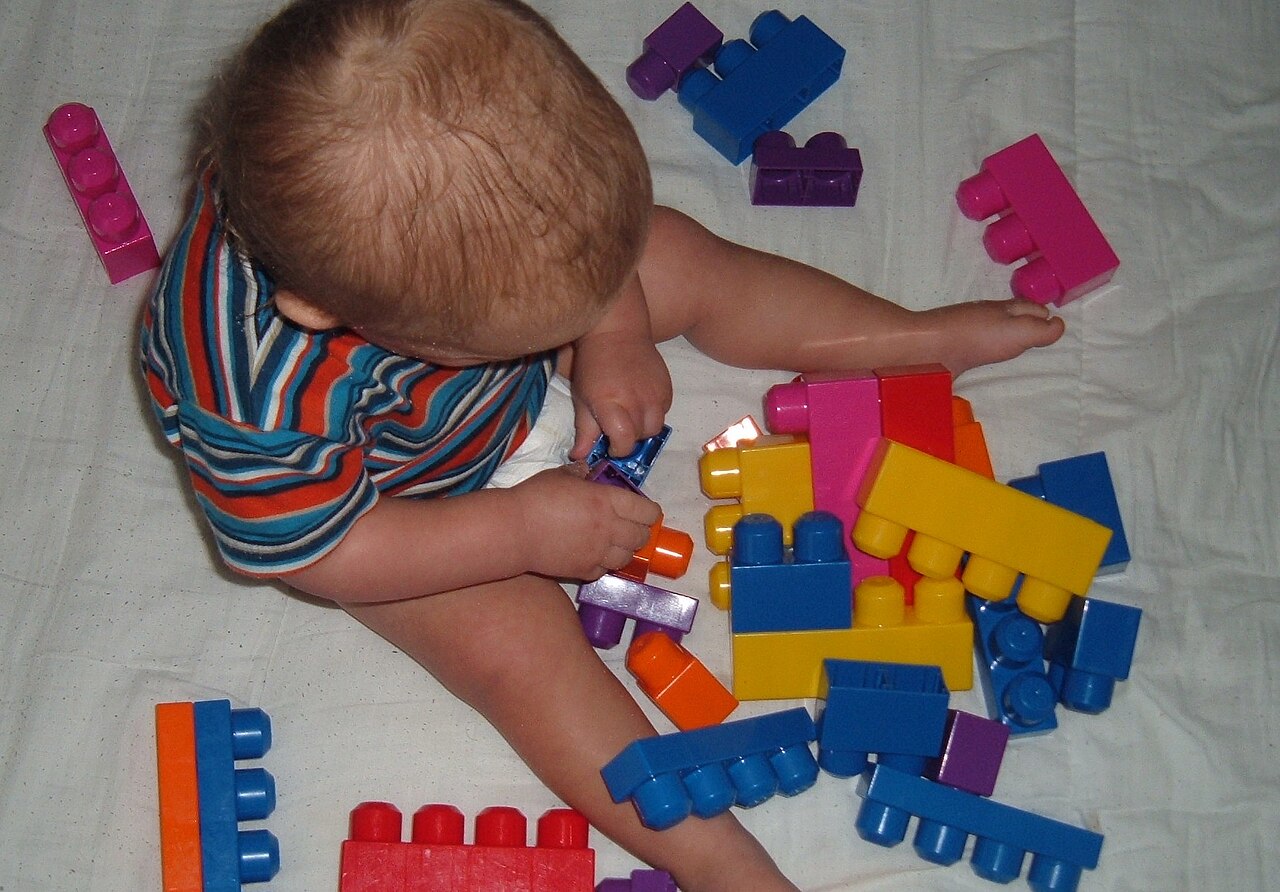
In a supervised study, 36 toddlers had individual free-play sessions with either four or sixteen toys. With four toys available, they had fewer separate play episodes, spent longer with a toy, and used toys in more varied ways. That is a useful observation about a short, controlled setting: a visually simpler choice set can support sustained exploration for some toddlers.
It is not evidence that every home should own four toys, that a tidy room creates better development, or that rotation has proven long-term effects. The study did not test family schedules, siblings, childcare settings, toy quality, or months of use. It gives a reason to try reducing what is visible, not a rule to enforce.
Sources: The Influence of the Number of Toys in the Environment on Toddlers’ Play
Try a rotation as an experiment
If the room feels overwhelming, put most toys in a closet or lidded bin and leave a small mix: something for building, movement, books, pretend, and sensory exploration. Watch what happens over a week. Does the child return to an item? Does cleanup become easier? Does the child miss a particular material? Those answers matter more than achieving an ideal-looking shelf.
Rotation can be low effort. Move two items out when you bring two in, or simply clear a surface before a playtime. You do not need matching bins, a calendar, or a rule about how long a toy must stay away. Familiar toys often become more interesting when a child has gained a new action or story.
Sources: The Influence of the Number of Toys in the Environment on Toddlers’ Play · Selecting Appropriate Toys for Young Children in the Digital Era
Keep choice and access in the plan
Fewer visible toys should not mean withholding a cherished comfort object, a needed adaptive tool, or a child’s favorite way to play. Some children benefit from predictable access to particular sensory materials; others may want a broader choice after a long day. A rotation is serving the household only if it makes play calmer or easier, not if it becomes another parenting task.
Consider safety and practical boundaries alongside attention. Keep age-inappropriate older-child pieces separate, check recalled products before returning them to circulation, and discard or repair broken items. A toy stored away is still worth a quick inspection when it returns.
Sources: CPSC Recalls and Product Safety Warnings · CPSC Toy Safety
What to take from the evidence
The research result is narrow but usable: in one experiment, fewer toys were associated with longer and more varied play with each toy. The practical suggestion is broader but tentative: simplify the visible selection when it helps your child and home. Neither claim says a child needs boredom, deprivation, or a minimalist family life to play well.
The strongest common thread in toy guidance is not a count. It is safe, developmentally fitting materials and opportunities for a child to act, imagine, move, and connect with another person. A single well-used basket can do that; so can a fuller home with a little help finding a starting point.
Sources: The Influence of the Number of Toys in the Environment on Toddlers’ Play · Selecting Appropriate Toys for Young Children in the Digital Era
Sources & limits
Practical setups are editorial suggestions. Research findings apply to the populations and conditions studied; they are not product tests by Toy Almanac.
- The Influence of the Number of Toys in the Environment on Toddlers’ Play ↗
Controlled study of 36 toddlers, four versus sixteen toys, with short supervised individual play sessions.
Source date: 2018-02 · Checked 2026-09-16 - Selecting Appropriate Toys for Young Children in the Digital Era ↗
AAP clinical report on play, caregiver interaction, toy selection, and limits of developmental toy claims.
Source date: 2019-01-01 · Checked 2026-09-16 - CPSC Toy Safety ↗
Current U.S. regulator guidance for age labels, hazards, and toy safety.
Checked 2026-09-16 - CPSC Recalls and Product Safety Warnings ↗
Live U.S. recall and warning database; records and remedies can change.
Checked 2026-09-16