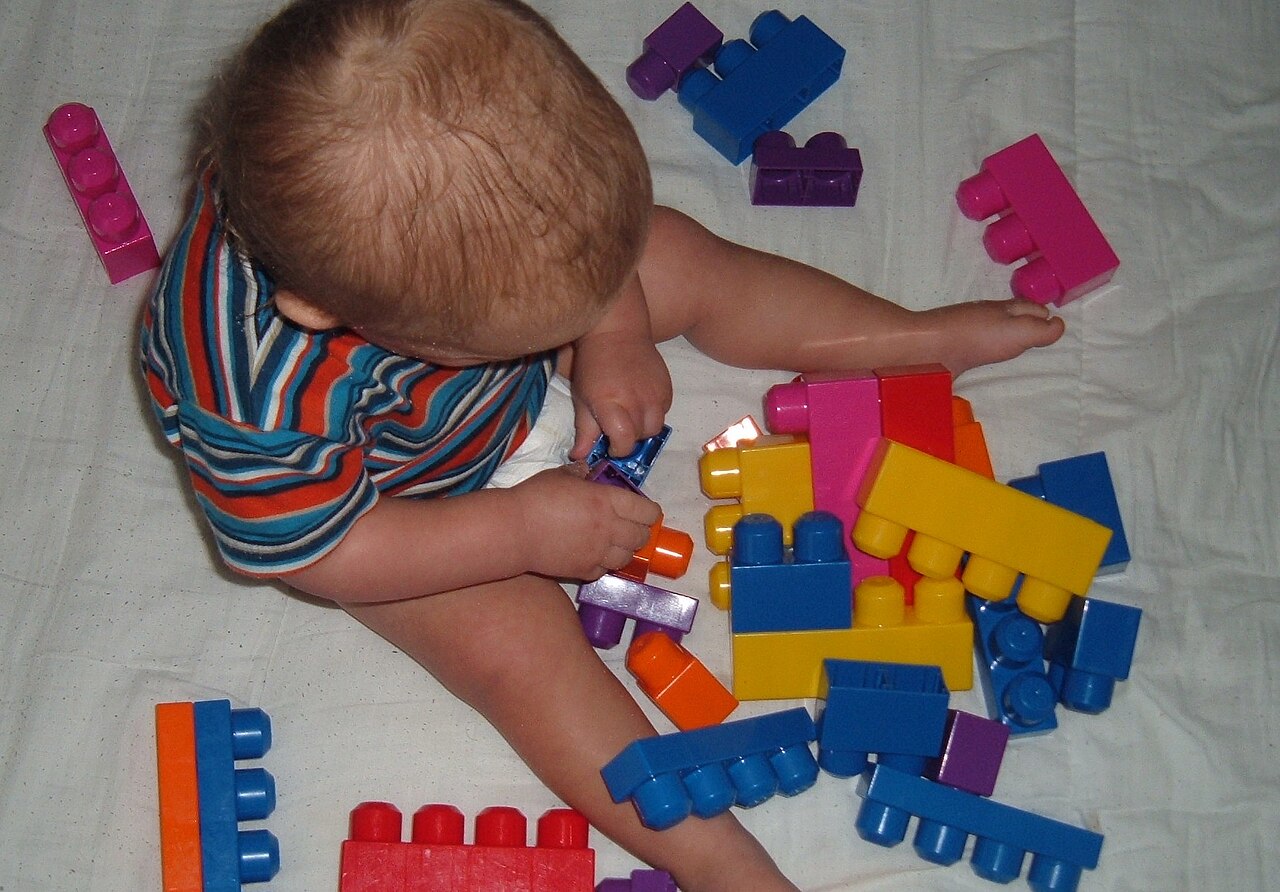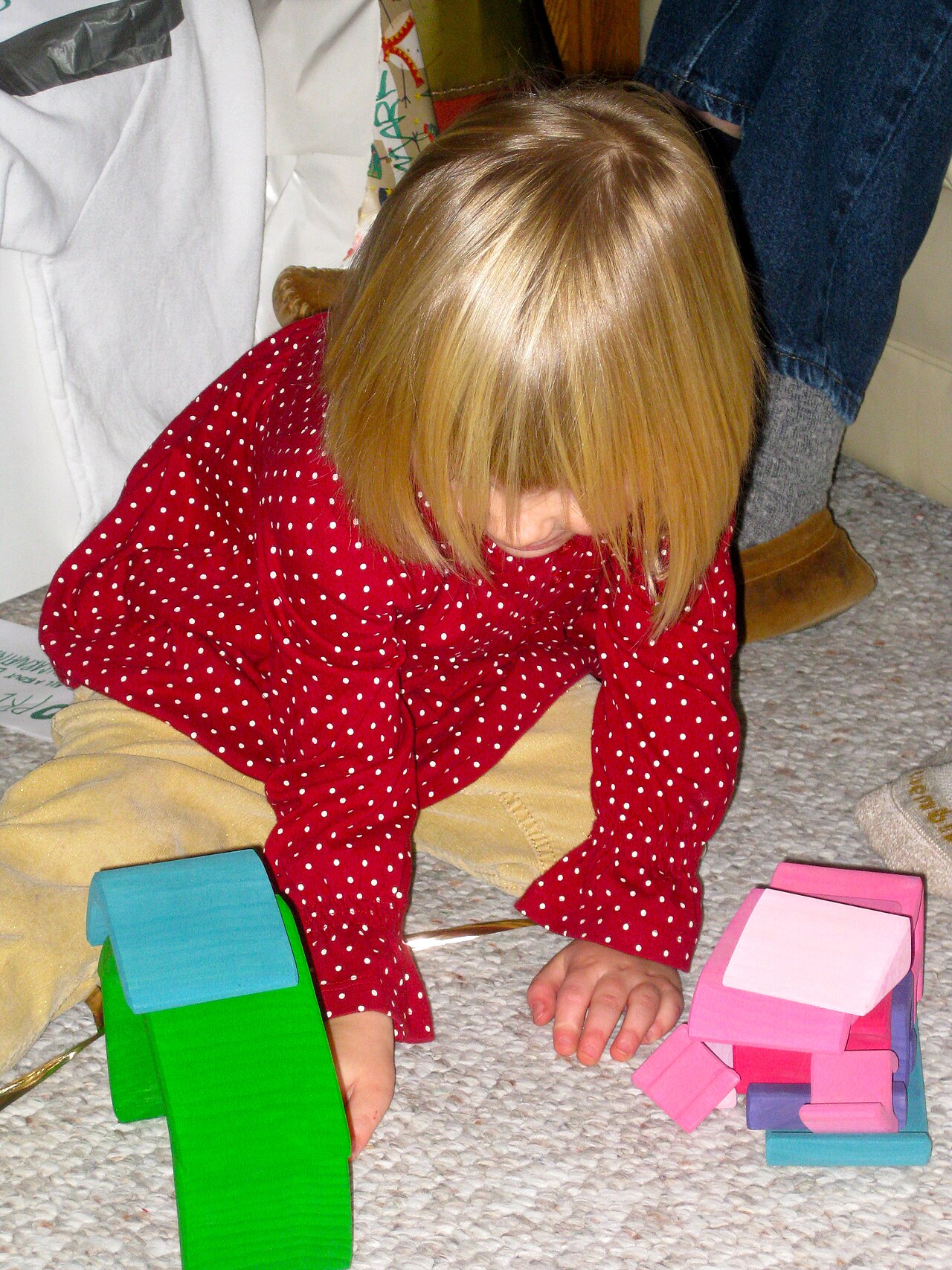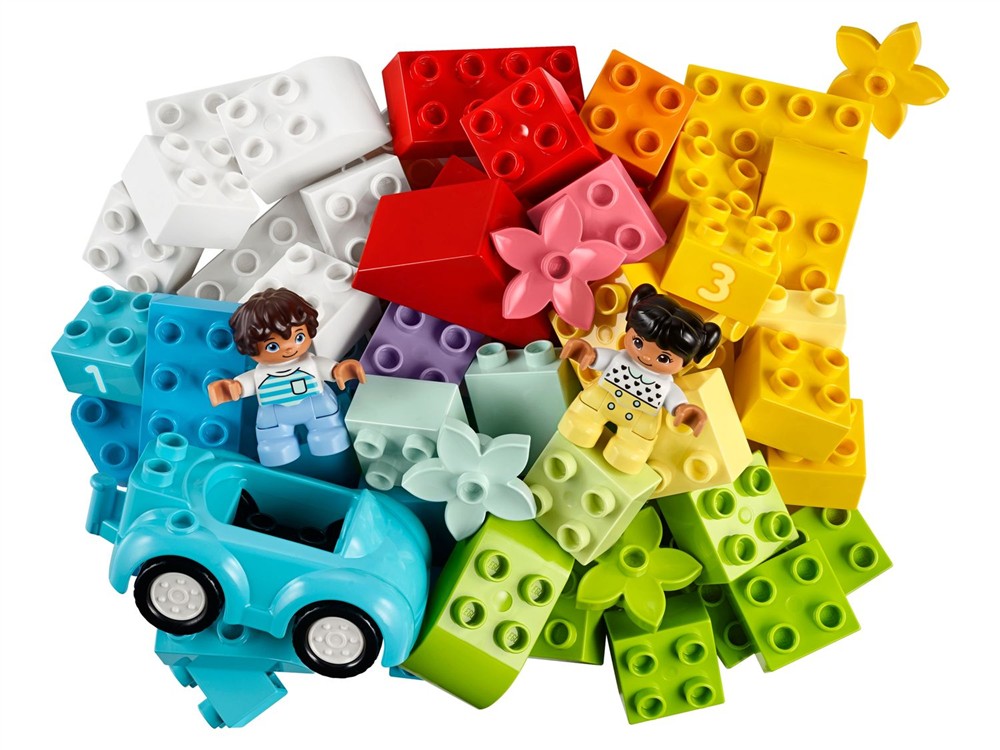
Blocks create rich opportunities to explore space; add simple position words and let the child remain the builder.
What blocks make possible
Blocks can be carried, lined up, stacked, knocked down, sorted, enclosed, bridged, and turned into story objects. That range is why they are often called open-ended. The phrase describes many possible uses, not a guarantee of creativity or intelligence. Large, age-appropriate blocks give toddlers a chance to explore position, balance, size, and part-whole relationships with their hands.
The AAP notes that traditional favorites such as blocks and puzzles can support problem-solving, fine-motor activity, language, and cognitive development in play contexts. Those are opportunities, especially when an adult joins responsively, not product-specific outcome claims.
Sources: Selecting Appropriate Toys for Young Children in the Digital Era
Spatial language is a simple add-on
When a child is building, describe the relation they are already exploring: on, under, next to, inside, tall, long, around, behind, and across. "You put the small block on the big one" is enough. Gestures can help too: point under the bridge, trace the long road, or hold your hands wide for a wide tower.
A meta-analysis of 20 early spatial-training studies found that young children’s spatial skills are malleable and that hands-on exploration, visual prompts, and gesture-based training were among the approaches studied. The studies were heterogeneous and not all toddler block play, so it cannot establish that a block set alone produces a particular later outcome.
Sources: Is Early Spatial Skills Training Effective? A Meta-Analysis · Selecting Appropriate Toys for Young Children in the Digital Era
Offer challenges that stay playful
Set up a small invitation: two blocks and a toy animal that needs a bridge, a row of blocks to step a vehicle over, cups to nest beside blocks, or a box to build around. Then allow the child to change the plan. Knocking down a tower is part of learning about stability and a perfectly good ending.
Avoid taking over to make a more impressive structure. If the child wants help, steady the base, hand over one piece, or narrate the problem. A challenge should be easy to leave, easier to adjust, and never a test of whether a child is ready for STEM.
Sources: Selecting Appropriate Toys for Young Children in the Digital Era · Is Early Spatial Skills Training Effective? A Meta-Analysis
Safety keeps the material age-specific
Choose block size and construction for the child’s current abilities. Sets intended for older children can include small parts or magnets that are inappropriate for toddlers. Inspect wooden blocks for splinters and cracks, plastic blocks for splits and loose components, and magnetic construction toys for any damage or exposed magnets.
The research supports spatial learning as a promising area of development, while its limits are equally important: studies differ in age, training, and outcomes. Let blocks be durable tools for ordinary play and conversation, rather than a purchase framed as an investment in a child’s future.
Sources: CPSC Toy Safety · Is Early Spatial Skills Training Effective? A Meta-Analysis
Sources & limits
Practical setups are editorial suggestions. Research findings apply to the populations and conditions studied; they are not product tests by Toy Almanac.
- Selecting Appropriate Toys for Young Children in the Digital Era ↗
AAP clinical report on play, caregiver interaction, toy selection, and limits of developmental toy claims.
Source date: 2019-01-01 · Checked 2026-09-16 - Is Early Spatial Skills Training Effective? A Meta-Analysis ↗
Meta-analysis of 20 studies in children aged 0–8; interventions and outcomes were heterogeneous.
Source date: 2020-09 · Checked 2026-09-16 - CPSC Toy Safety ↗
Current U.S. regulator guidance for age labels, hazards, and toy safety.
Checked 2026-09-16