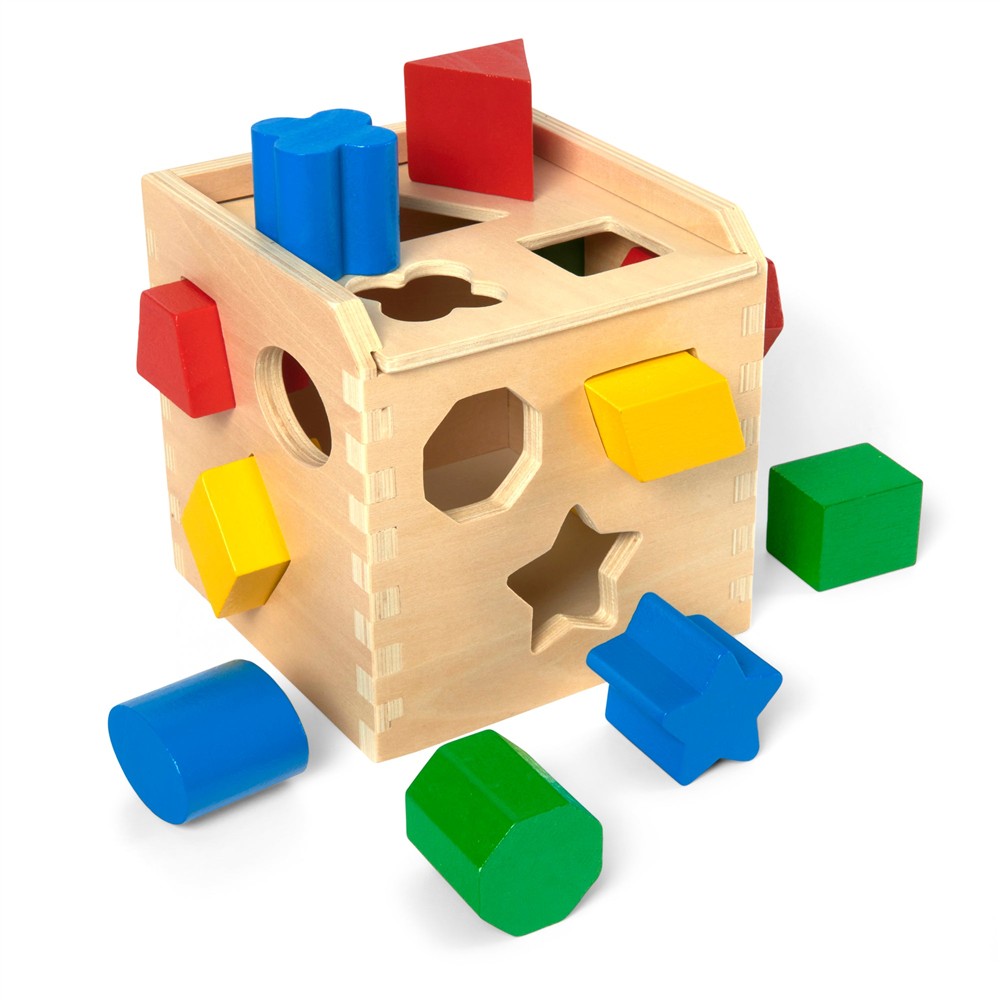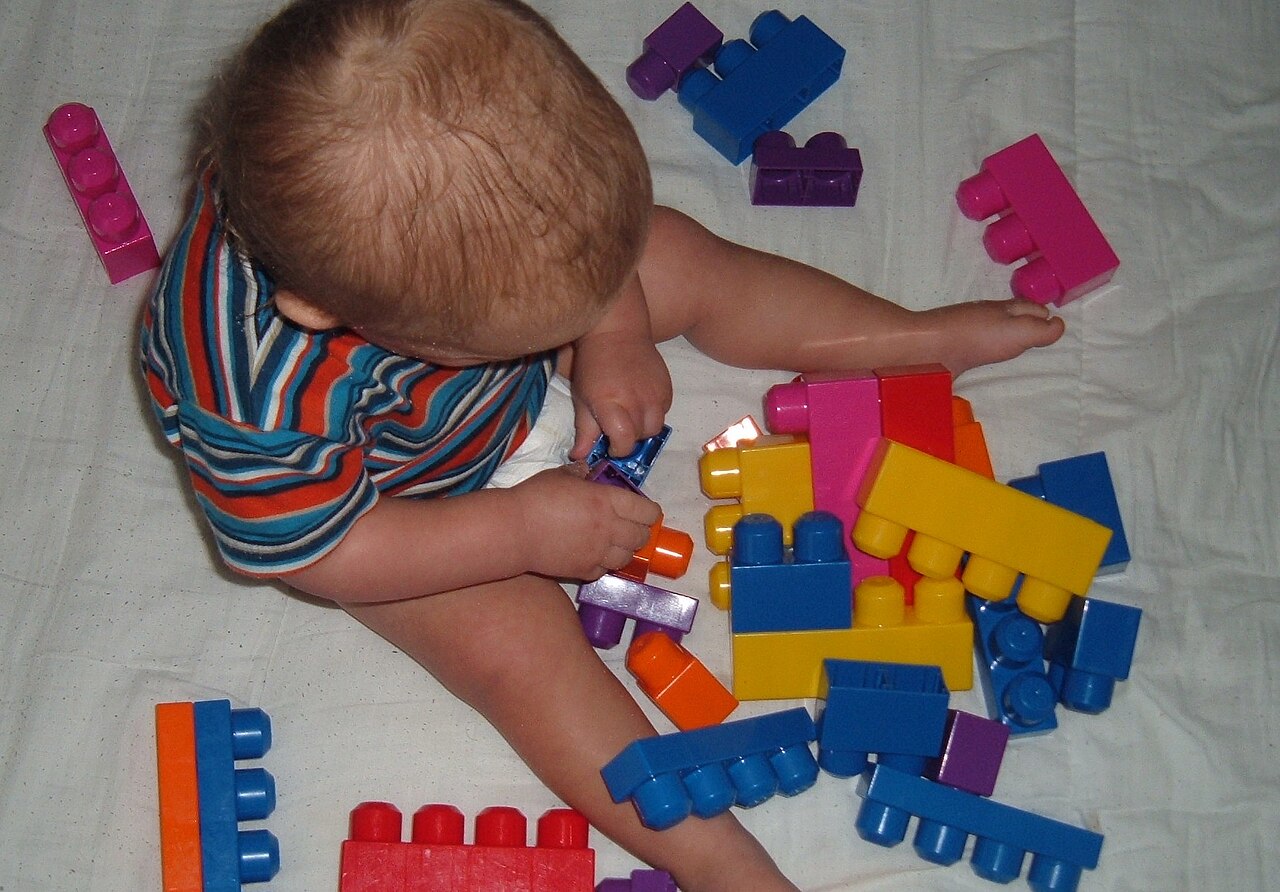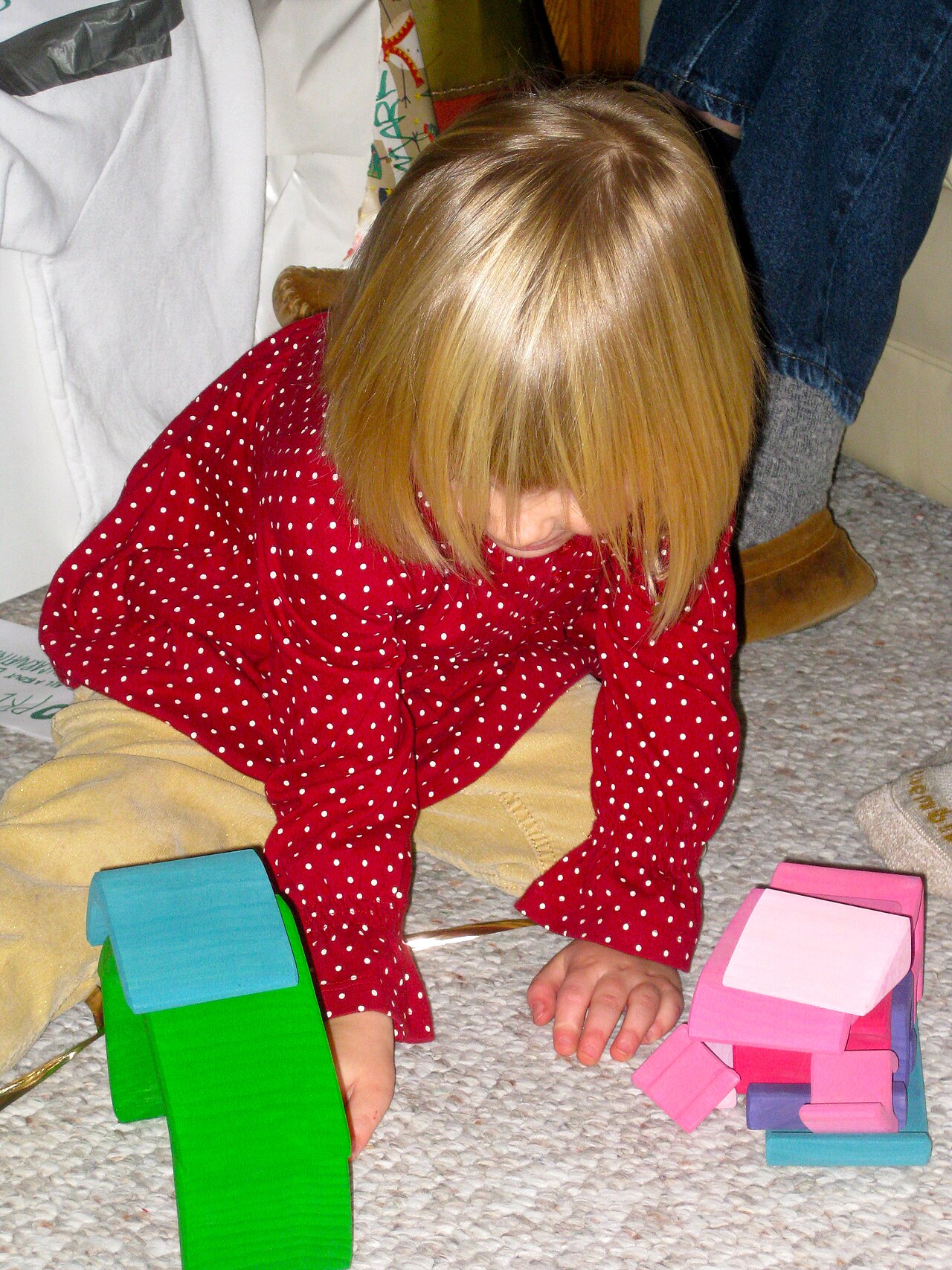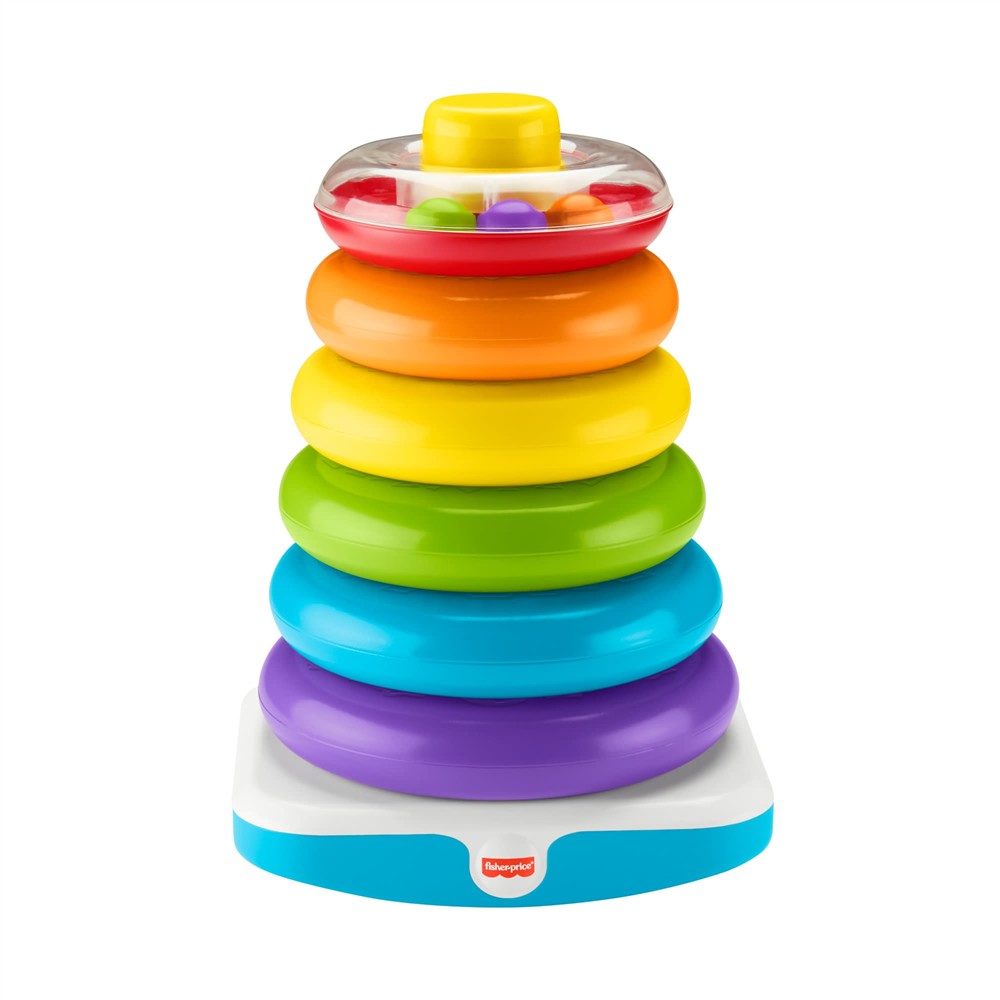
A few safe objects and one stable container are enough; let the child decide how much repetition feels satisfying.
Set out a very small invitation
Choose one open, sturdy container and two or three objects large enough for the child’s age and current mouthing behavior. A clean, empty basket with large fabric blocks or a wide bowl with chunky stacking cups can work. Put one object in, take it out, and wait. Some children will immediately copy; others will dump the whole set, put one item on their head, or carry the container away. All of those actions can be the start of play.
CDC lists putting an object in a container as a one-year cognitive milestone and suggests in-and-out container play for 18-month-olds. Milestones are population-level observations, not a checklist to turn into a lesson. They do not mean every 12-month-old should use the same container, or that a child who finds a different use for it needs correcting.
Sources: Milestones by 1 Year · Milestones by 18 Months
Make the pattern visible
Editorial suggestion: narrate only what you can see: ‘in,’ ‘out,’ ‘again,’ ‘all gone,’ or ‘you found it.’ Then leave room for the child’s own sound or action. Hide one large toy under a cloth beside the container, place an object on top instead of inside, or offer a second container when the first pattern is familiar. The child controls the repetition; an adult does not need to keep adding a harder challenge.
For a child using one hand differently from the other, place the container where it is easiest to reach and stabilize it rather than forcing a particular grip. A wider opening, a heavier base, or fewer objects can reduce frustration. These are practical access adjustments, not therapy or a way to measure development. If a child is uninterested, switch to another ordinary activity without trying to persuade them into the ‘right’ kind of play.
Sources: Milestones by 1 Year · Serve and Return: Back-and-forth exchanges
Choose objects for safety, not novelty
Avoid posting toys or containers that use small balls, coins, bottle caps, beads, magnets, button batteries, or any loose parts from older-child sets. Do not use food as a sensory filler for this play. Check that the container has no sharp rim, broken handle, cord, or lid that could trap fingers. Supervise closely, especially because an open container invites a child to explore what else might fit.
CPSC’s toy safety guidance emphasizes age labels, small parts, and inspection for damage. A simple setup is only simpler when every item is safe for this child and the child is not competing with a younger sibling for access. Pack the objects away after play if they do not belong in the general toy area.
There is no need to buy a specialized posting toy to make this game worthwhile. If a household object is not safe or comfortable to supervise, skip it. The useful part is the child’s repeated action and an adult who notices it, not the label on the container.
Sources: Toy Safety
Sources & limits
Practical setups are editorial suggestions. Research findings apply to the populations and conditions studied; they are not product tests by Toy Almanac.
- Milestones by 1 Year ↗
CDC milestone page includes putting an object in a container as an example of what most children do by one year; milestones are not diagnostic screening tools.
Source date: 2026-05-15 · Checked 2026-09-19 - Milestones by 18 Months ↗
CDC page includes parent activities such as rolling balls, simple toy play, and putting blocks in and out of containers; it is not a toy prescription.
Source date: 2026-05-15 · Checked 2026-09-19 - Serve and Return: Back-and-forth exchanges ↗
Center on the Developing Child explanation of responsive exchanges around young children’s sounds, gestures, and expressions; not a developmental assessment.
Checked 2026-09-19 - Toy Safety ↗
Current CPSC consumer guidance on age labels, small parts, inspection, and common toy hazards.
Checked 2026-09-19