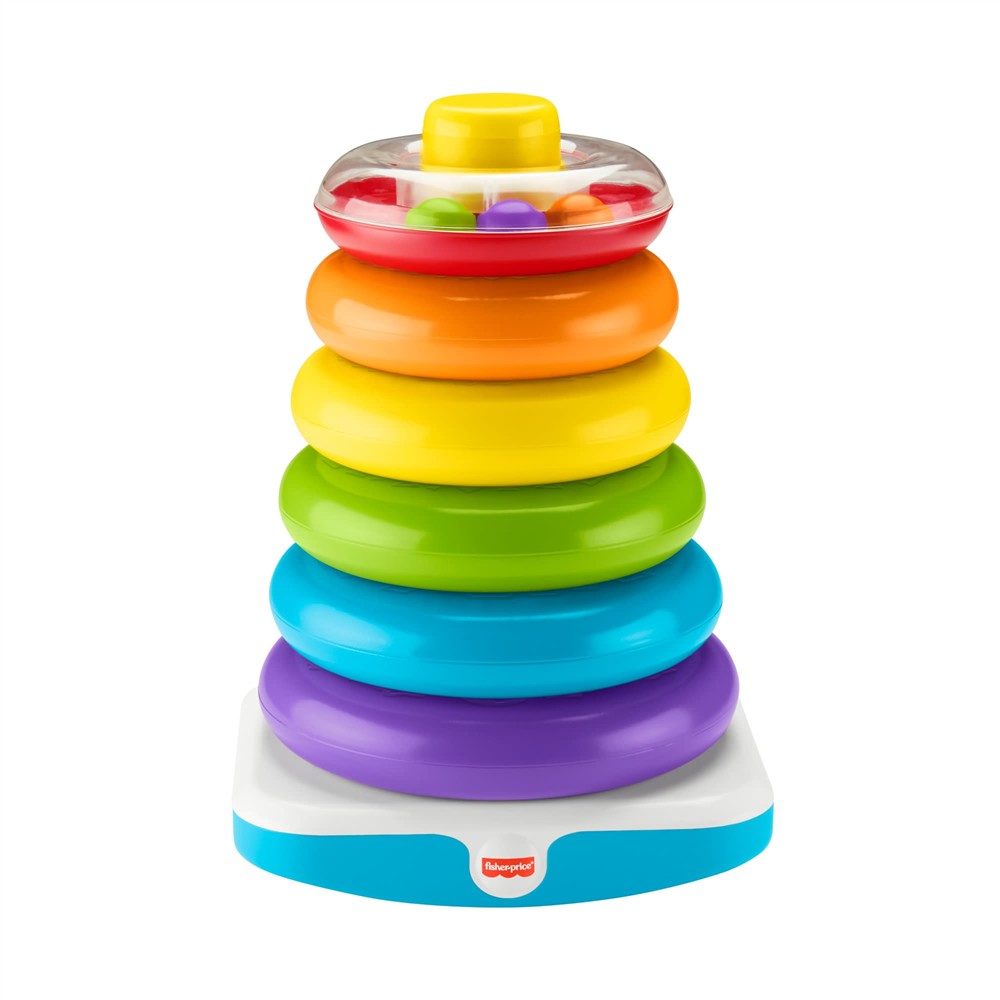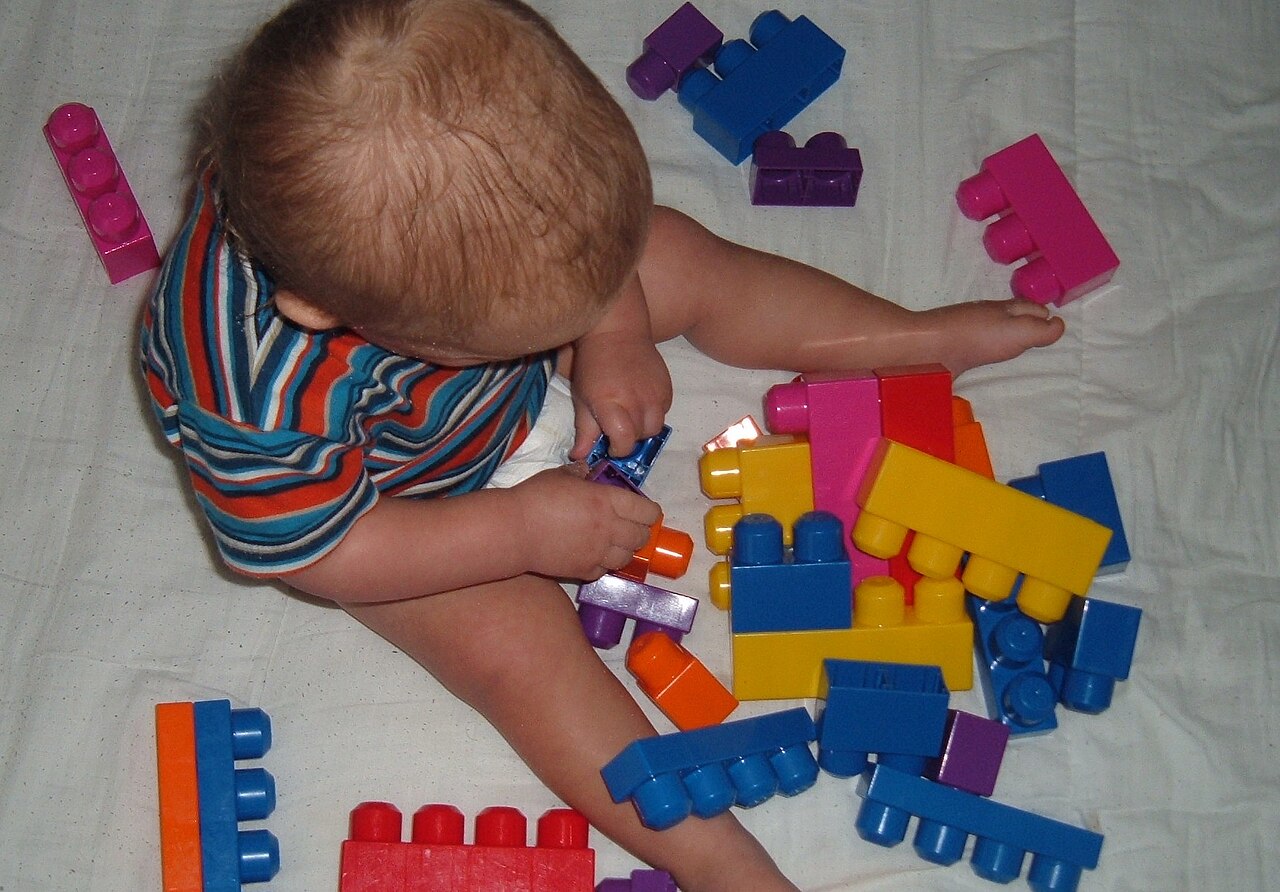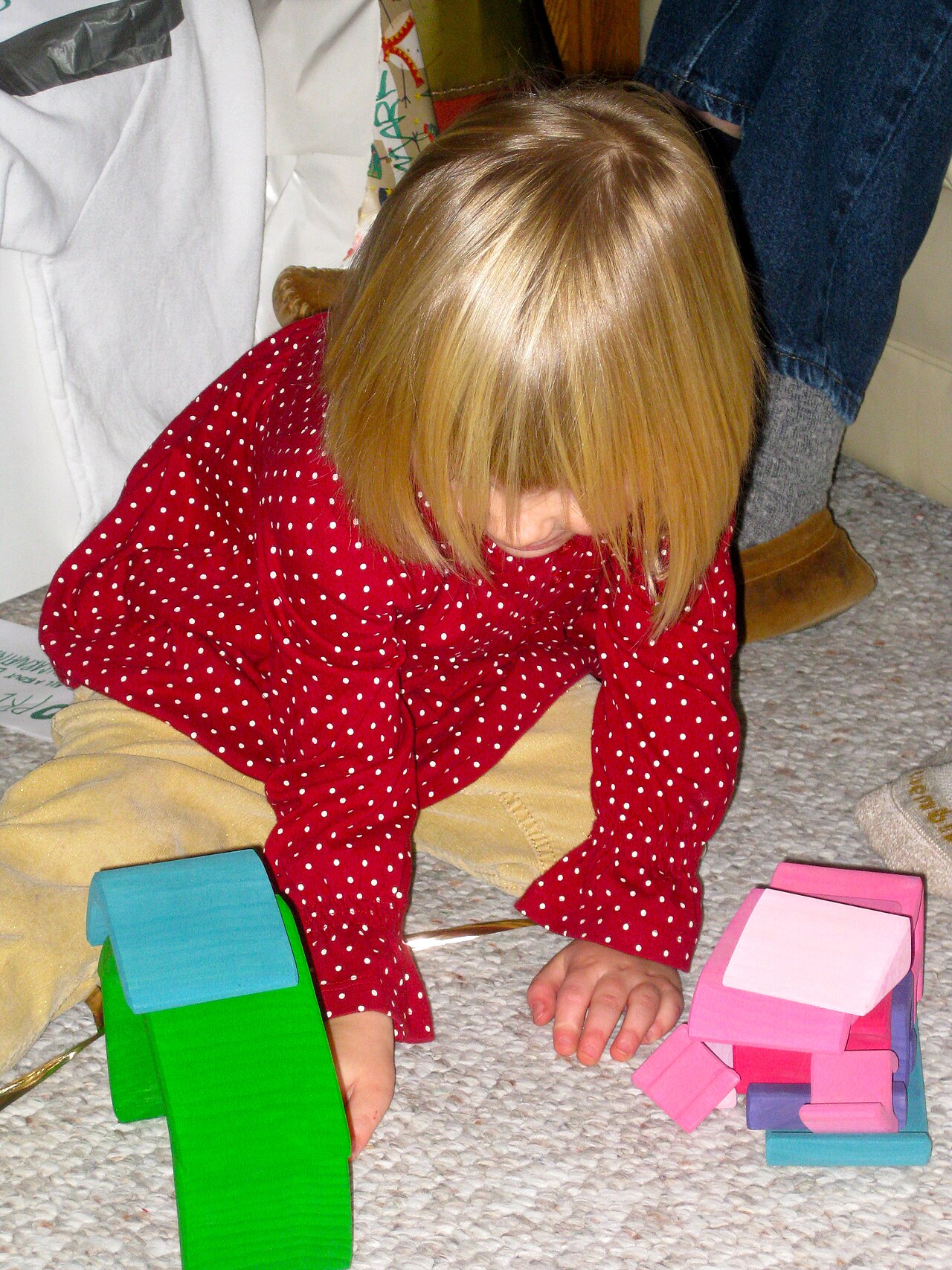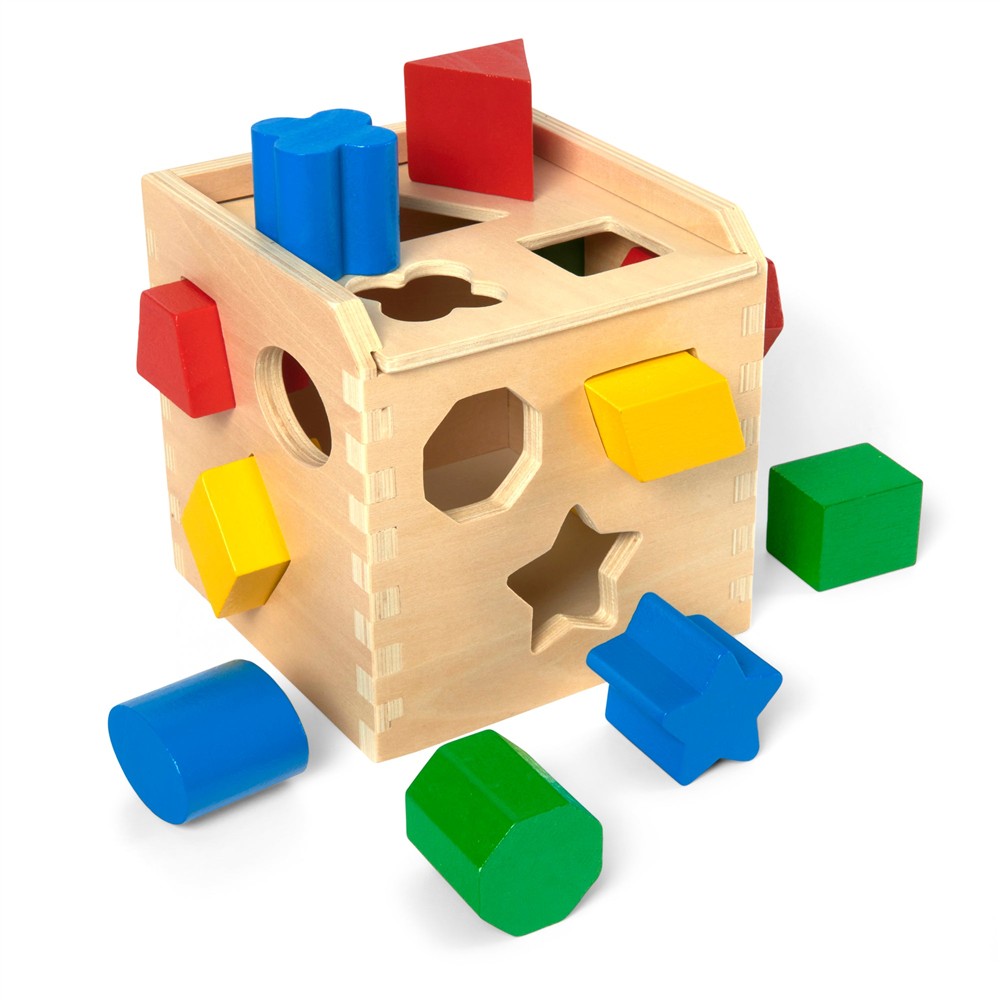
Make the first puzzle problem small, offer just enough help, and stop while it can still feel like play.
Start with an easier question
A first puzzle is not a test of patience or intelligence. For a younger toddler, one large, chunky inset piece or a simple two-piece match may be plenty. Place the board on a stable floor or low table, remove all but one or two pieces, and let the child explore the piece before expecting a fit. A child may turn it over, mouth it, carry it away, or use it like a vehicle; that is information about the play, not failure.
The useful problem is usually smaller than adults expect: Which way does this piece turn? Is this opening the same shape? Can I press and then lift? CDC activity suggestions include putting blocks in and out of containers and simple toy play, while AAP guidance describes traditional puzzles as opportunities for hands-on problem solving. Those are possibilities, not proof that a particular puzzle will create a particular skill or outcome.
Sources: Milestones by 18 Months · Selecting Appropriate Toys for Young Children in the Digital Era
Offer help in layers
Editorial suggestion: wait briefly before helping, then choose the lightest useful support. You might rotate the board so the picture is upright, point to the matching image, or say, ‘This one has a round space.’ If that does not help, partly line up the piece and let the child do the final push. Doing the whole puzzle for a toddler may end the frustration quickly, but it also removes the part they were trying to solve.
HealthyChildren’s problem-solving guidance recommends modeling a strategy and leaving some room for a child to work, rather than immediately supplying the answer. In play, that can sound ordinary: ‘Hmm, it did not go in that way. Let’s turn it.’ Keep your tone matter-of-fact. The point is not to manufacture productive struggle; it is to show that a mismatch can be noticed, changed, and left behind if it is no longer fun.
Know when to change the game
If the child throws the piece, cries, pushes the board away, or asks for help repeatedly, reduce the demand instead of insisting on one more try. Make a game of finding the animal, place the piece beside its space, or put the puzzle away for later. A quick ending can protect the relationship with the material better than a long lesson. Offer another movement or comfort activity if the child needs a reset.
Choose puzzles with pieces and construction appropriate to the child’s current age and supervision needs. Avoid sets meant for older children with loose small pieces, magnets, batteries, or damaged parts. Inspect a puzzle before use, particularly a hand-me-down, and follow its age label. CPSC frames age labels and hazardous small parts as practical safety information; they are not a measure of a child’s cleverness.
A puzzle can come back another day with no need to mention the earlier frustration. Put it where the child can see it, or choose a different material entirely. Interest, energy, hunger, and the number of other demands on a day all affect whether a first fit feels manageable.
Sources: Toy Safety · Raise a Problem Solver: 3 Ways Play Can Help
Sources & limits
Practical setups are editorial suggestions. Research findings apply to the populations and conditions studied; they are not product tests by Toy Almanac.
- Milestones by 18 Months ↗
CDC page includes parent activities such as rolling balls, simple toy play, and putting blocks in and out of containers; it is not a toy prescription.
Source date: 2026-05-15 · Checked 2026-09-19 - Selecting Appropriate Toys for Young Children in the Digital Era ↗
AAP clinical report on play, caregiver interaction, toy choice, and limits of developmental toy claims.
Source date: 2019-01 · Checked 2026-09-19 - Raise a Problem Solver: 3 Ways Play Can Help ↗
AAP parent guidance on modeling problem solving, allowing manageable struggle, and scaffolding rather than immediately supplying an answer.
Source date: 2023-10-16 · Checked 2026-09-19 - Toy Safety ↗
Current CPSC consumer guidance on age labels, small parts, inspection, and common toy hazards.
Checked 2026-09-19