The best pretend-play setup is a small, safe collection of familiar props that a child can turn into their own story.
Pretend is allowed to be ordinary
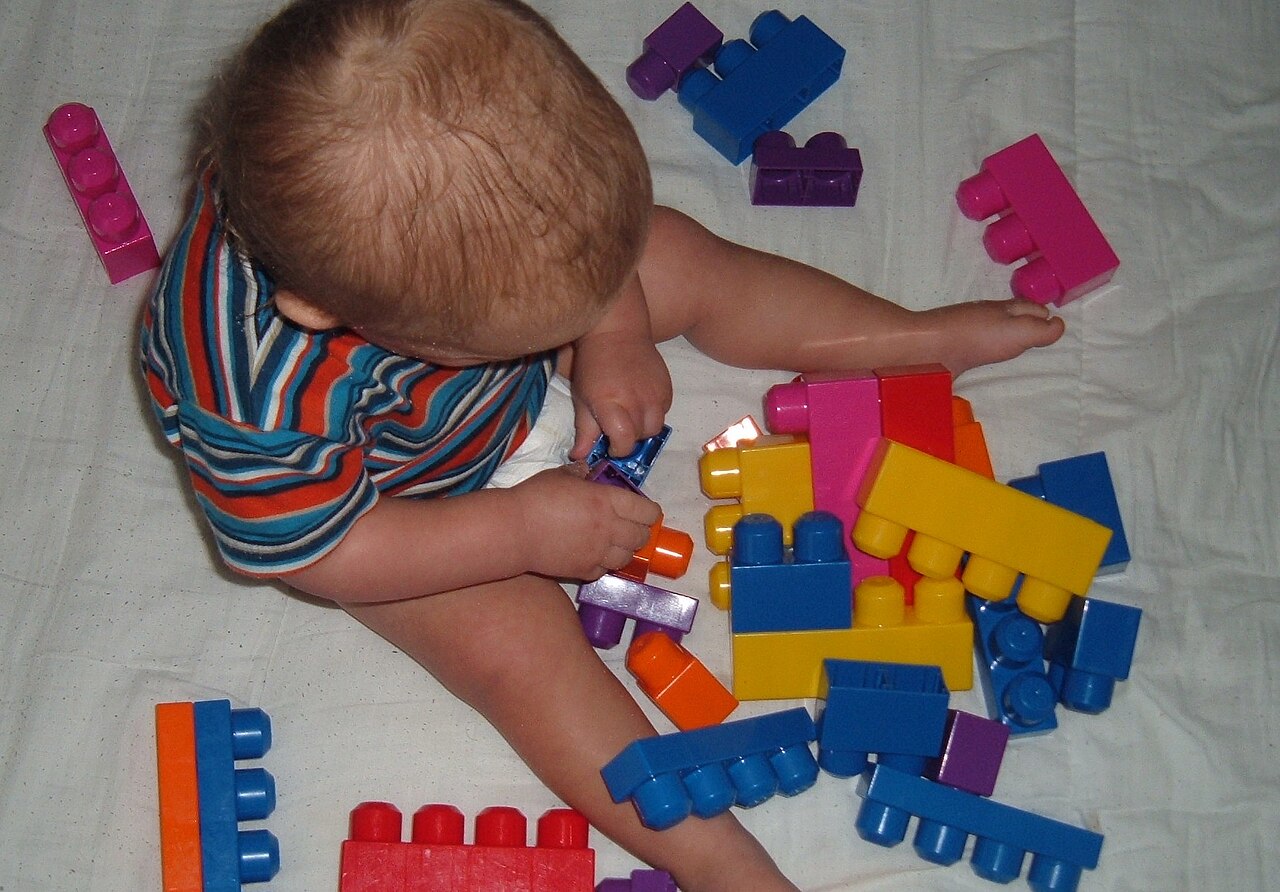
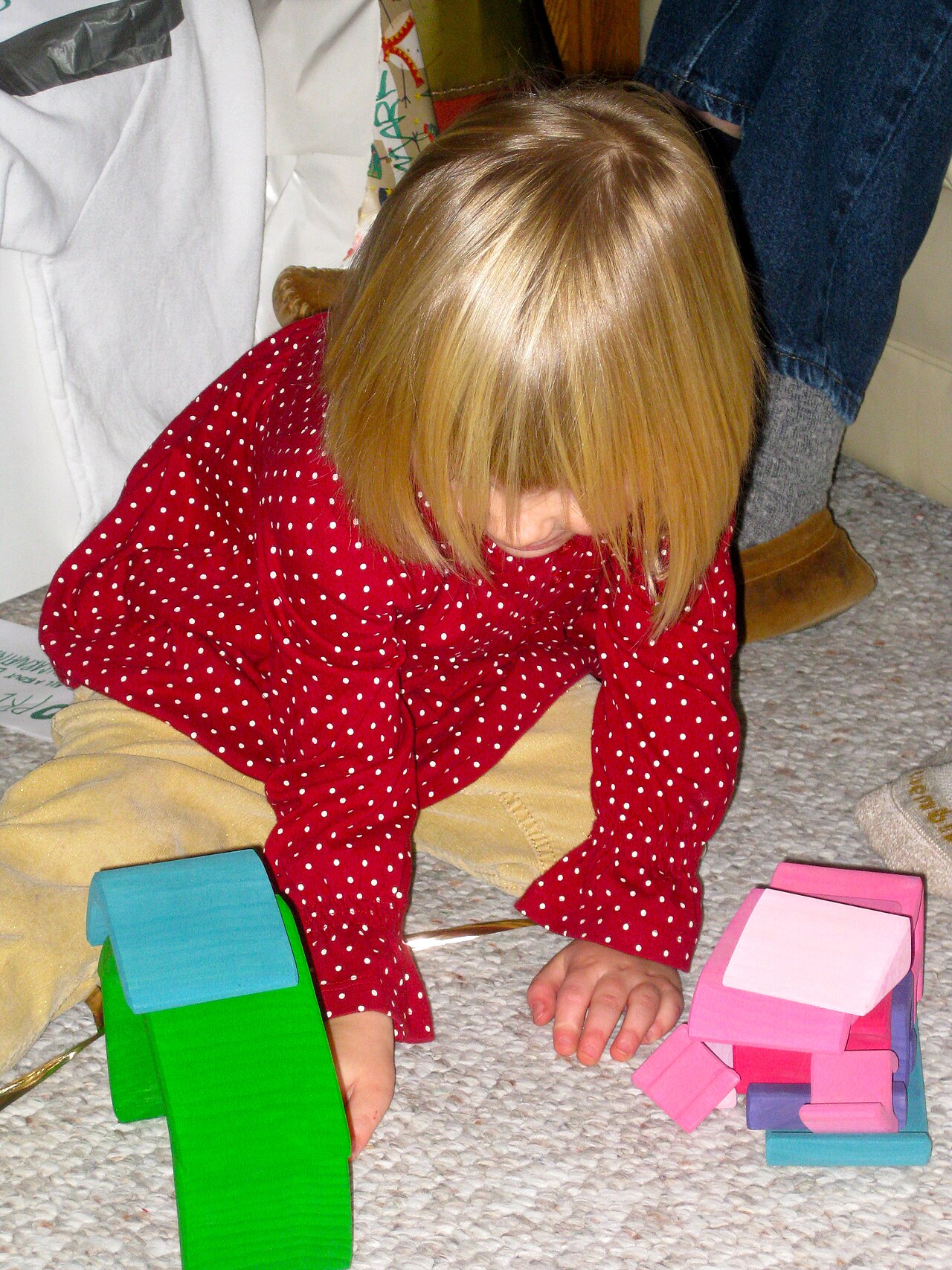
Pretend play often begins with familiar actions: putting a doll to bed, stirring an empty bowl, driving a block, feeding a stuffed animal, or making a box into a bus. You do not need a complete themed set. A doll, blanket, bowl, spoon, box, a few large blocks, and a safe empty container can offer more than enough material for a toddler to repeat and transform.
The AAP describes pretend play as a context for language, narrative, and social interaction, but the evidence does not show that a particular pretend product causes broad developmental gains. Treat the props as invitations. The child decides whether the block is a cookie, phone, pillow, or something entirely new.
Sources: Selecting Appropriate Toys for Young Children in the Digital Era
Build one small scene
Choose one routine the child recognizes: a bedtime basket with a doll, cloth, and book; a delivery station with boxes and large blocks; a snack shop with empty unbreakable bowls and pretend food; or a veterinarian corner with stuffed animals and a cloth bandage used only under adult supervision. Keep the scene on the floor or a low surface so the child can move pieces themselves.
Avoid using actual medicines, sharp tools, small caps, plastic bags, raw food, or anything with batteries, magnets, or breakable components as play props. The safest household-inspired setup is usually made from child-safe toys and sturdy everyday items selected for the child’s age.
Sources: CPSC Toy Safety · CPSC Button Cell and Coin Batteries
Join the story lightly
Take the role the child offers. If they hand you a cup, receive the pretend drink. If they put the animal to sleep, whisper goodnight. Add a detail only if it leaves room for the child to answer: "The bus is full. Where will it stop?" A child may answer in words, actions, or by changing the scene.
It is fine if the child wants you to repeat the same script. Repetition can be a way to practice control and remember a sequence. If the child prefers to play alone, stay nearby and let the scene belong to them.
Sources: Selecting Appropriate Toys for Young Children in the Digital Era
Keep expectations kind
Some children show pretend early, some later, and some prefer building, movement, sorting, or sensory exploration. A lack of interest in a doll or toy kitchen is not a verdict on imagination or social ability. Offer materials, model one small possibility, and follow the forms of play that are already engaging.
If play involves another child, duplicate popular props and protect each child’s role. A shared story can grow from parallel play, but it does not have to. The aim is a safe, flexible space for everyday ideas, not a performance of a developmental milestone.
Sources: CDC Developmental Milestones · Selecting Appropriate Toys for Young Children in the Digital Era
Sources & limits
Practical setups are editorial suggestions. Research findings apply to the populations and conditions studied; they are not product tests by Toy Almanac.
- Selecting Appropriate Toys for Young Children in the Digital Era ↗
AAP clinical report on play, caregiver interaction, toy selection, and limits of developmental toy claims.
Source date: 2019-01-01 · Checked 2026-09-16 - CPSC Toy Safety ↗
Current U.S. regulator guidance for age labels, hazards, and toy safety.
Checked 2026-09-16 - CPSC Button Cell and Coin Batteries ↗
Current regulator guidance on secured compartments and ingestion risk.
Checked 2026-09-16 - CDC Developmental Milestones ↗
Current milestone resource; age-band examples are population-level and not diagnostic.
Source date: 2026-02-16 · Checked 2026-09-16