Pick the safer, usable, well-maintained individual toy; wood versus plastic alone cannot tell you its play value or safety.
There is no universal winner
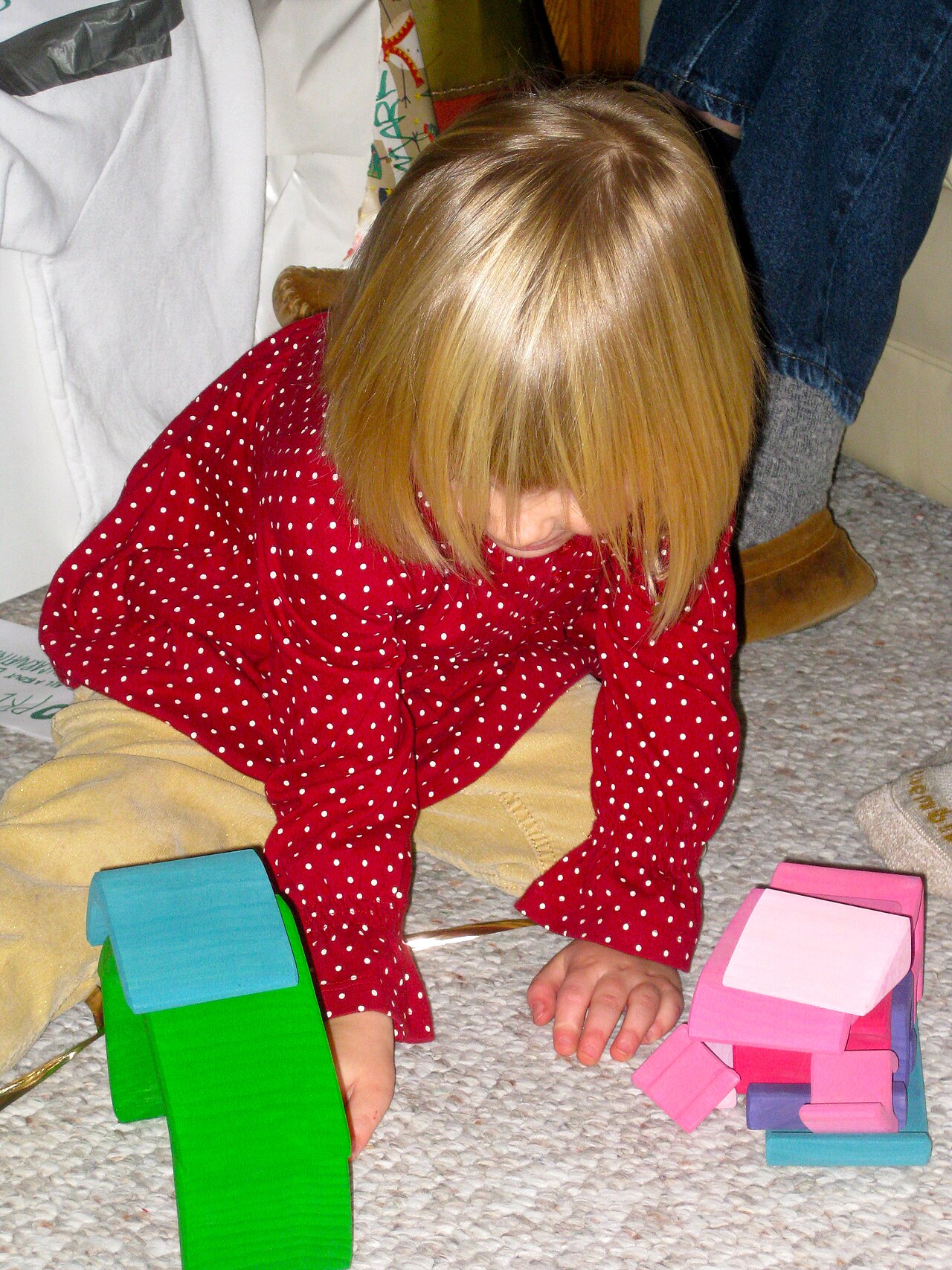
Wood and plastic are materials, not developmental categories. A solid wooden block and a large plastic block can both invite building, carrying, balance, and pretend use. Either can also be poorly finished, cracked, too heavy, hard to clean, or unsuitable for a particular child. The research does not establish that wooden toys create superior long-term development simply because they are wood.
The AAP recommends thoughtful, affordable, developmentally appropriate toys that encourage interaction, imagination, exploration, and problem-solving. That advice focuses on the child’s use of the toy, rather than awarding a material a developmental halo.
Sources: Selecting Appropriate Toys for Young Children in the Digital Era
Questions that travel across materials
Start with the actual item: Is it made for this age and this child’s abilities? Is it intact, washable in the way your household needs, and comfortable to grasp? Can it be used in more than one way? Are there sharp edges, splinters, cracks, loose decorations, exposed fasteners, accessible magnets, or batteries? Does the manufacturer provide care instructions and a clear identity for recall checks?
For a toddler who mouths, drops, or throws toys, inspect the condition repeatedly. Wood can splinter or crack; plastic can split, become sticky, or expose seams. A material claim on packaging does not substitute for an inspection or for following age and safety information.
Sources: CPSC Toy Safety · CPSC Button Cell and Coin Batteries
Practical tradeoffs, not purity tests
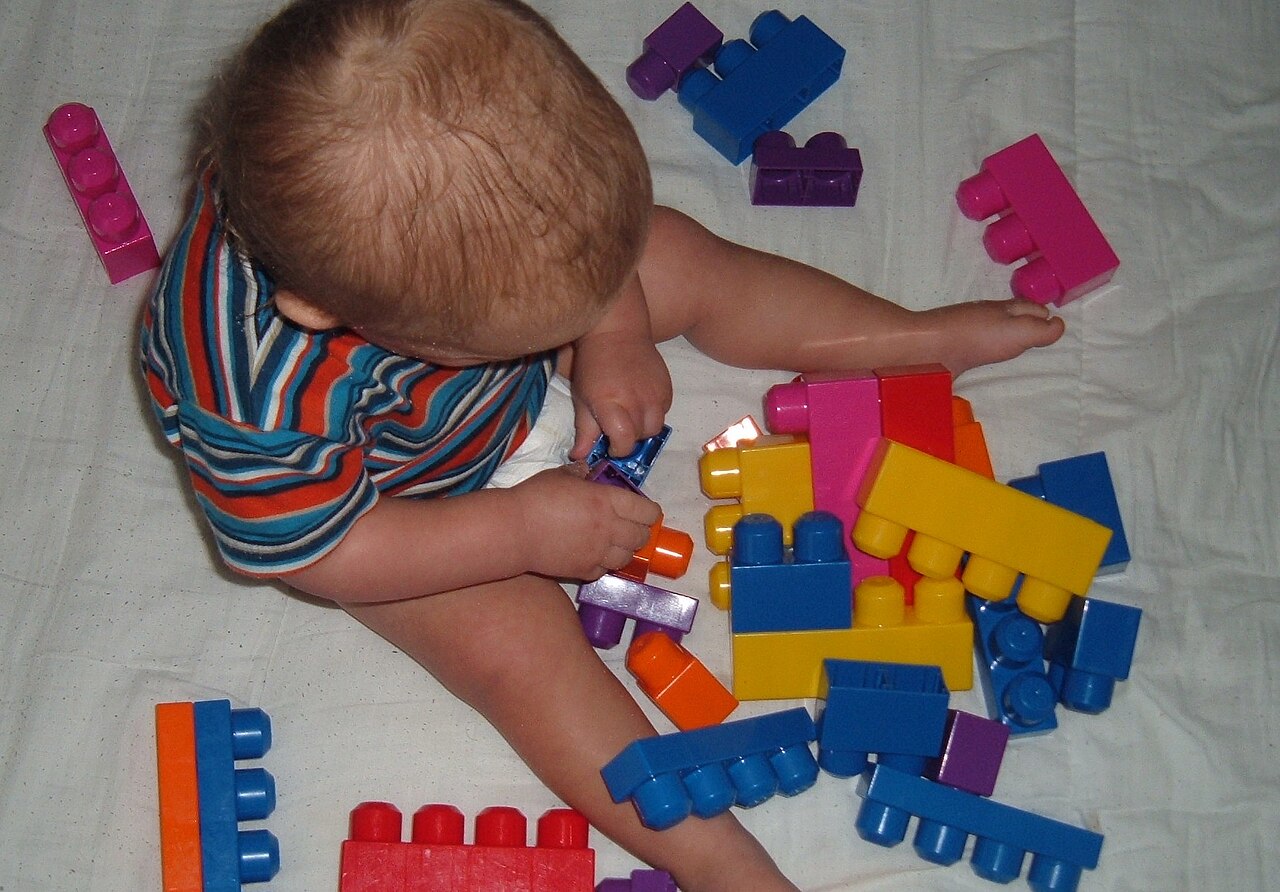
Wood may feel substantial, be repairable in some cases, and work well for simple blocks or puzzles. It can also be heavier, damaged by soaking, and difficult to sanitize if unfinished or cracked. Plastic may be light, washable, and useful for bath, outdoor, or large-piece construction play. It can be noisy, harder to repair, and vulnerable to damage from heat or stress. These are practical possibilities, not rules about every product.
If environmental impact is a priority, look for specific information about durability, repair, replacement parts, packaging, and expected years of use. Be careful with broad "non-toxic," "natural," or "eco" marketing. Those phrases do not describe every component, finish, safety feature, or product lifespan.
Sources: Selecting Appropriate Toys for Young Children in the Digital Era · CPSC Toy Safety
A calmer buying decision
Choose the version that meets your safety, cleaning, budget, space, and play needs. A well-loved plastic hand-me-down that is intact and not recalled can be more useful than a costly wooden item that stays out of reach. A simple wooden set can be excellent if it suits your child and can be cared for safely.
For secondhand toys, verify the exact item in a current recall database and pass on anything with unknown origin, damage, missing labels, or components you cannot assess. Material is one part of the decision; condition and traceability are often more important.
Sources: CPSC Recalls and Product Safety Warnings · CPSC Toy Safety
Sources & limits
Practical setups are editorial suggestions. Research findings apply to the populations and conditions studied; they are not product tests by Toy Almanac.
- Selecting Appropriate Toys for Young Children in the Digital Era ↗
AAP clinical report on play, caregiver interaction, toy selection, and limits of developmental toy claims.
Source date: 2019-01-01 · Checked 2026-09-16 - CPSC Toy Safety ↗
Current U.S. regulator guidance for age labels, hazards, and toy safety.
Checked 2026-09-16 - CPSC Button Cell and Coin Batteries ↗
Current regulator guidance on secured compartments and ingestion risk.
Checked 2026-09-16 - CPSC Recalls and Product Safety Warnings ↗
Live U.S. recall and warning database; records and remedies can change.
Checked 2026-09-16